See all
Save the dates of your favorite races Synchronize your calendars
See all
Stage

15

Sunday 24
May 2026

157 km
Altitude Gain 200 m

Starting in

D ::

Voghera -

Milano

profile

map

technical info

Route
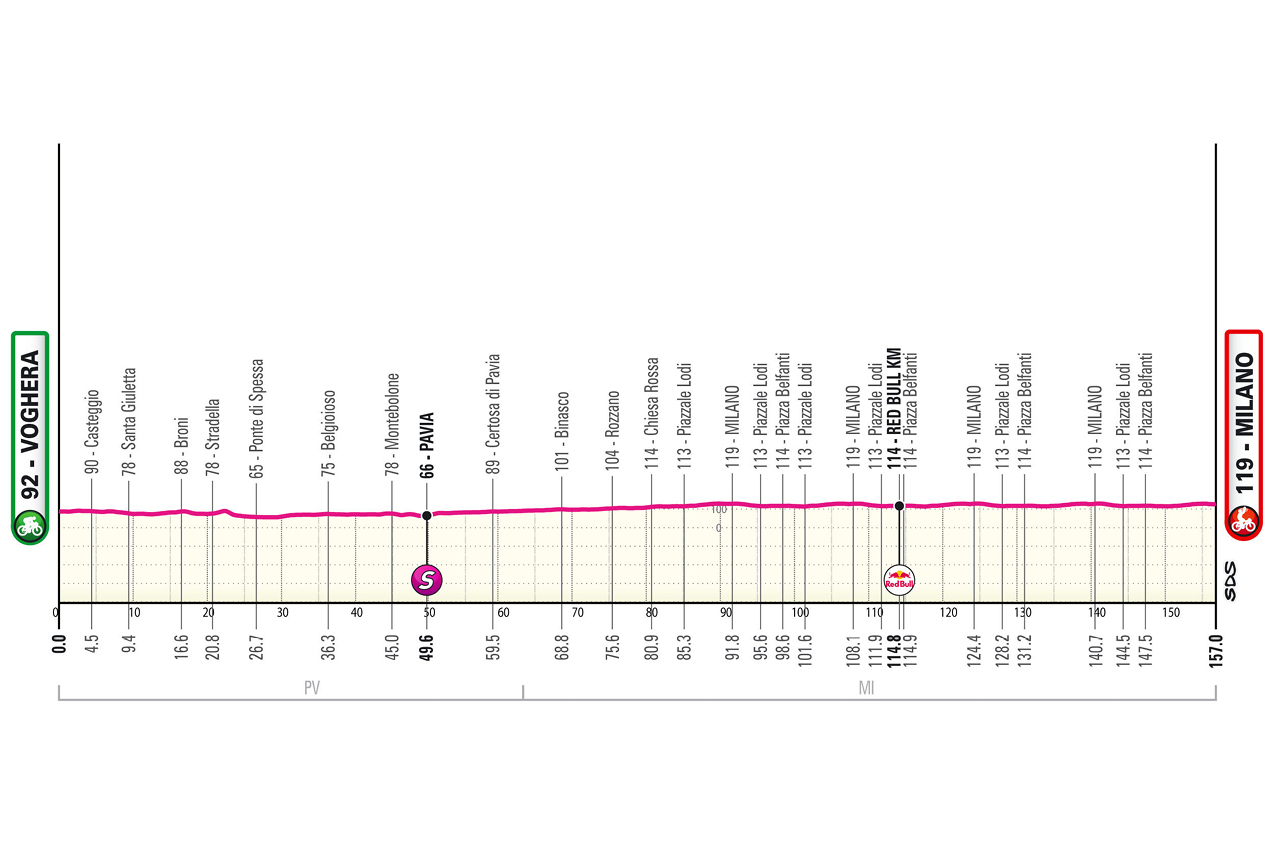
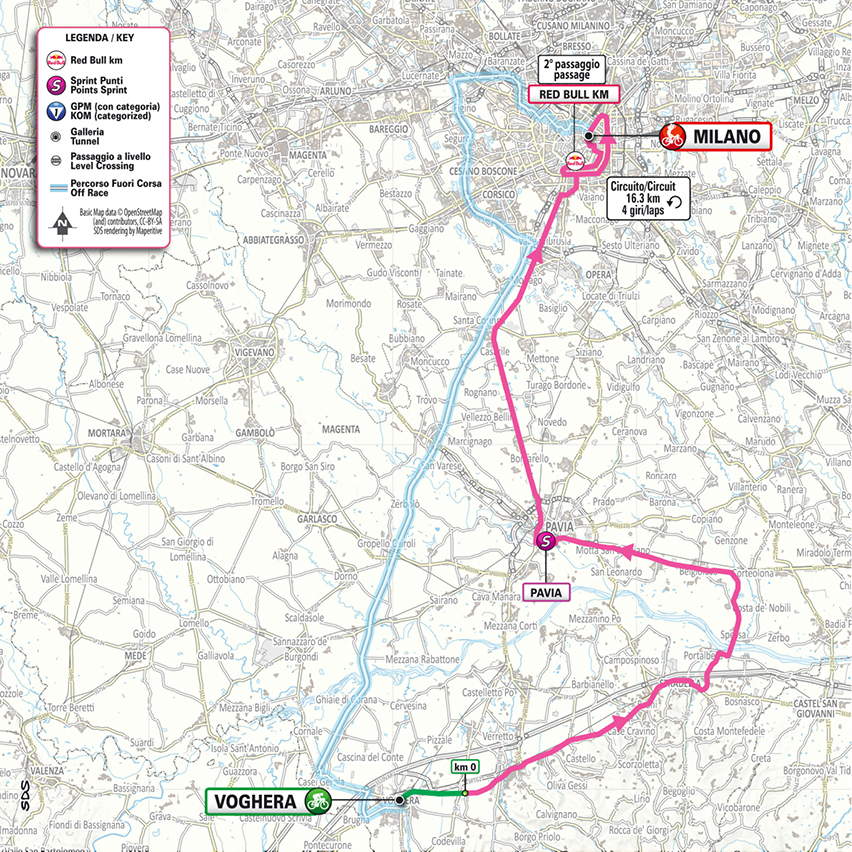
Completely flat stage. The race starts in Voghera and heads towards Pavia on wide, predominantly straight roads. After Pavia, the route follows sections of the historic Milano–Sanremo course to reach Milan. After passing the Chiesa Rossa, riders enter the final circuit of 16.3 km, which is to be covered four times.
Final kilometres
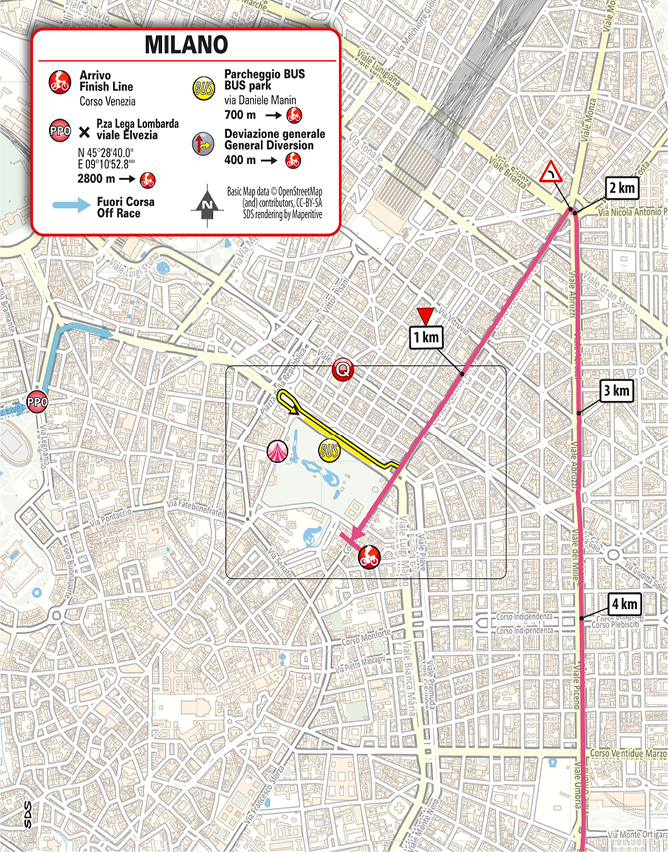
The 16.3 km circuit is entirely flat and laid out on wide boulevards with very few corners, the last of which comes at approximately 2 km from the finish. The finishing straight is flat, on 8 m wide asphalt, well suited to a high-speed bunch sprint.

start / finish

final kilometres

itinerary timetable

Strava Route

  • profile
  • map
  • technical info
  • start / finish
  • final kilometres
  • itinerary timetable
  • Strava Route
Save the dates of your favorite races and receive all the informations about the races

tourist info

Host city:

start
finish

Voghera


Overview

Located in the plains of the Oltrepò Pavese, Voghera is a town in south-western Lombardy, historically positioned along key routes linking the Po Valley with the Ligurian Apennines. Its origins date back to Roman times, while in the Middle Ages it developed into an important administrative and commercial centre. The historic centre retains an orderly urban layout, with civic and religious buildings reflecting the different phases of the city’s development. Over time, Voghera has established itself as a service and transport hub for the surrounding area, maintaining a central role within the Pavia region.

Gastronomy

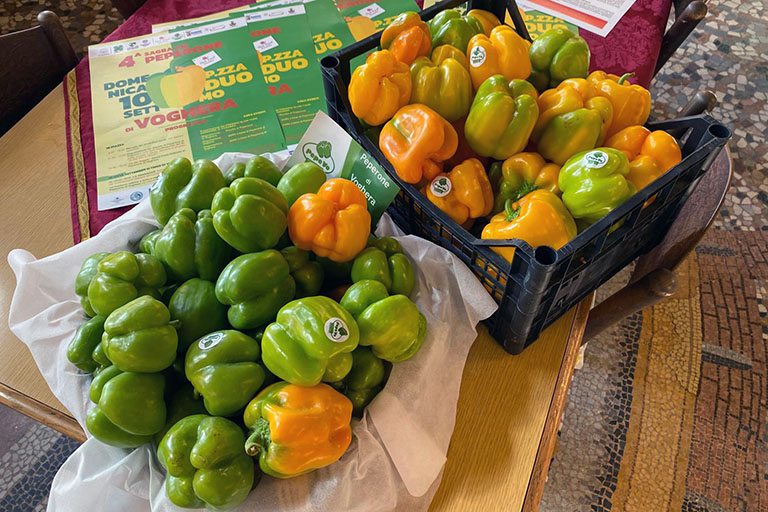
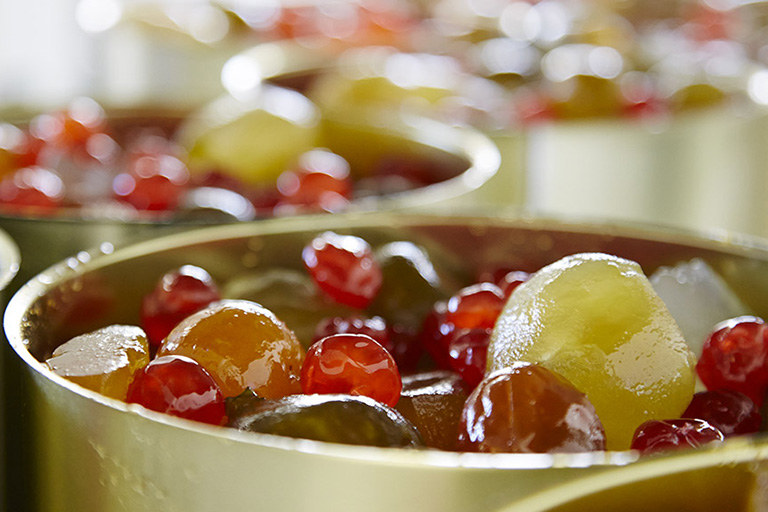
Voghera’s culinary tradition is deeply rooted in the Oltrepò Pavese, shaped by strong agricultural heritage and distinctive local products. Among its standout specialties is the Voghera pepper, a sweet and delicate variety cultivated since the early 20th century, now recognised as a De.C.O. product and a Slow Food Presidio – symbolising the area’s agricultural revival. Another hallmark is mostarda di Voghera, a historic delicacy made from whole candied fruits preserved in a mustard-flavoured syrup, combining sweetness with a subtle spicy kick and traditionally paired with meats and cheeses. Together, these specialties reflect a cuisine that blends memory, tradition, and a deep appreciation of local excellence.

Wine and other drinks

Voghera is considered one of the key centres of the Oltrepò Pavese, one of Italy’s largest wine-producing areas, with around 13,000 hectares of vineyards. The territory is especially suited to Pinot Noir, used both for Metodo Classico sparkling wines and for structured reds. Alongside it, varieties such as Riesling, Bonarda, and Buttafuoco stand out – expressions of a diverse mosaic of microclimates and soils that give the local production its distinctive character and identity.

Highlights & Landmarks

Voghera’s heritage reflects a layered history shaped by civic, religious, and cultural landmarks. Among its most prominent symbols is the Visconti Castle, built in 1372 as the residence of Galeazzo Visconti and later used for various purposes, including as a prison; today it has been restored and hosts events and exhibitions, with frescoes attributed to Bramantino.

In the heart of the city stands the Cathedral of San Lorenzo, begun in the 17th century and inspired by the Cathedral of Pavia, housing a Serassi organ from 1833 and the relics of Saint Bovo, the city’s patron saint. The main square is also home to the Town Hall, a neoclassical building adorned with notable painted decorations.

Among the most significant complexes is the former Cavalry Barracks, now housing the Ricottiana Library, museums, and offices, currently undergoing redevelopment projects. Also of interest is Palazzo Gallini, a historic residence with 19th-century frescoes and an important art collection.

The city’s cultural life is enriched by venues such as the Luisa Pagano Hall, an elegant Liberty-style exhibition space, and the Valentino Garavani Theatre, a historic theatre recently reopened. Among religious buildings, the Cavalry Shrine, known as the “Red Church,” stands out, while the Giuseppe Beccari Historical Museum preserves significant collections linked to military history, completing the portrait of a city rich in heritage and identity.

Milano


Overview

World capital of fashion and design, Milan lives poised between a centuries-long historical and cultural tradition and a creative stance looking forward to innovation and the world at large. Its destiny is already in its name, Mediolanum, meaning “place in the middle” between different territories and peoples, a hub for trade and commerce from the very beginning. Born as a Celtic village it has been through the centuries the Capital of the Western half of the Roman Empire, a major Renaissance Court at the time of Ludovico il Moro and Leonardo da Vinci, a place of plunder for French, Spaniards, Austrians – finally to be annexed to the Kingdom of Italy in 1861.  From the 18th century to the present Milan has never ceased to renew its look, from the Neo-Classical lines of Teatro alla Scala to the sumptuous Galleria Vittorio Emanuele and finally to the high-rise of its skyscrapers that, from Gio Ponti to the international archistars, have re-drawn its skyline.

Food

Tradition and innovation also co-exist in the Milan of taste, between ancient recipes and contemporary gourmet versions. History is represented by risotto alla milanese, with marrowbone steak and saffron rice, mondeghili (fried meatballs), rostin negàa (roast doused in white wine). The typical Christmas cake is Panettone, now famous throughout the world.

Milan provides cooking for every taste and every budget: 20 Michelin-starred restaurants, countless trattorie, local eateries, vegetarian, romantic, traditional and ethnic. But also bars and pubs to celebrate the rite of aperitivo in the evening, with elaborate cocktails and tasty finger food.

Points of interest

A textbook visit to the city can only start from its centre: the Duomo, with its marbles, its spires, its great windows and its five centuries of history; the elegant Galleria Vittorio Emanuele; Piazza della Scala, with the Theatre and the monument to Leonardo da Vinci. Milan’s history is especially visible in centuries of churches and Christian symbols: the imposing antiquity of San Lorenzo, with its columns; the beauty of Lombard Romanic in Sant’Ambrogio; the Renaissance in Santa Maria delle Grazie, with Leonardo’s Last Supper, the cloister and the sacristy; the frescoed interior of San Maurizio al Monastero Maggiore. A place of history and Art, but of protected leisure by its courts and towers as well, Castello Sforzesco houses masterpieces such as Michelangelo’s Pietà Rondanini and the Sala delle Asse with the recently restored wall paintings by Leonardo.

Milano offers enthusiasts more than 80 museums, such as Pinacoteca di Brera, Pinacoteca Ambrosiana, Gallerie d’Italia, Galleria d’Arte Moderna or its House Museums Focus is not on art only but on science as well: look up Museo Nazionale di Scienza e Tecnologia, named after Leonardo. The contemporary has found home at Museo del Novecento, Fondazione Prada, the new Museo del Design at the Triennale, while Palazzo Reale, PAC – Padiglione di Arte Contemporanea and MUDEC periodically host exhibitions of international standing.

With a short metro or tramcar trip one can reach the charming alleyways of the Brera district, take an evening stroll by the romantic Navigli, window-shop across fashion streets like via Montenapoleone or via della Spiga, breathe freely in Parco Sempione or in another of the many parks and gardens. While the new Milan soars in the Porta Nuova district, with Piazza Gae Aulenti and the Bosco Verticale; and in the CityLife area, with its three towers.

Milan also captivates for the rich vibrancy of the events held throughout the year, starting from the Week&City series, successful in involving the whole city under the banner of a shared theme. Among the most famous are the Fashion Weeks, bringing to Milan the big pret-à-porter brands together with the new emerging fashion houses; Design Week, during Salone del Mobile (Furniture Fair), when creativity takes over the city with events and exhibits; and Art Week, dedicated to contemporary art, with openings, temporary exhibitions and international guests.

Follow us
#giroditalia

top sponsor

institutional partners

official suppliers

official licensees