See all
Save the dates of your favorite races Synchronize your calendars
See all
Stage

13

Friday 22
May 2026

189 km
Altitude Gain 1400 m

Starting in

D ::

Alessandria -

Verbania

profile

map

technical info

Route
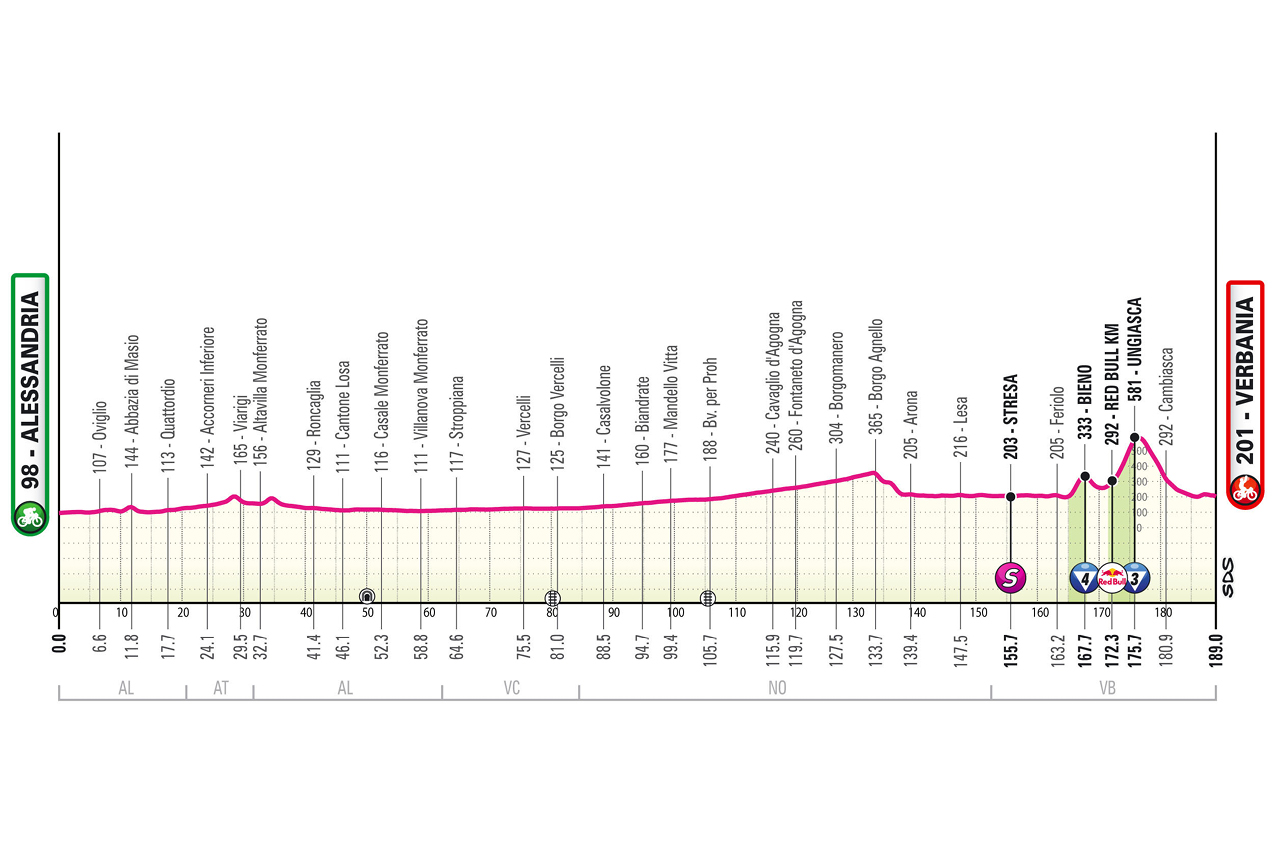
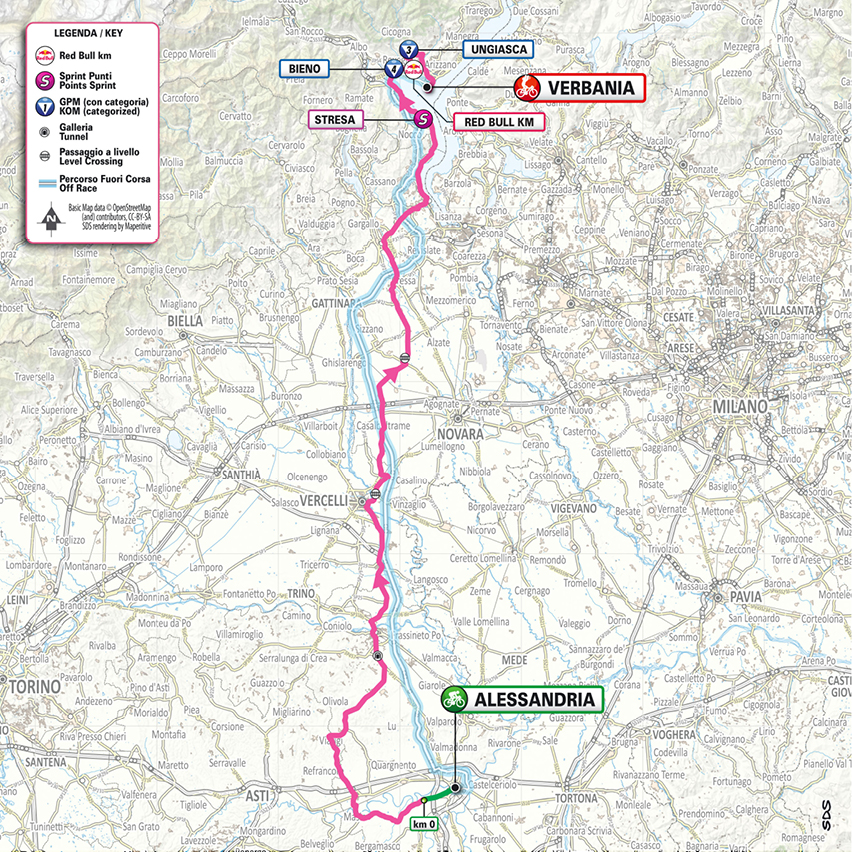
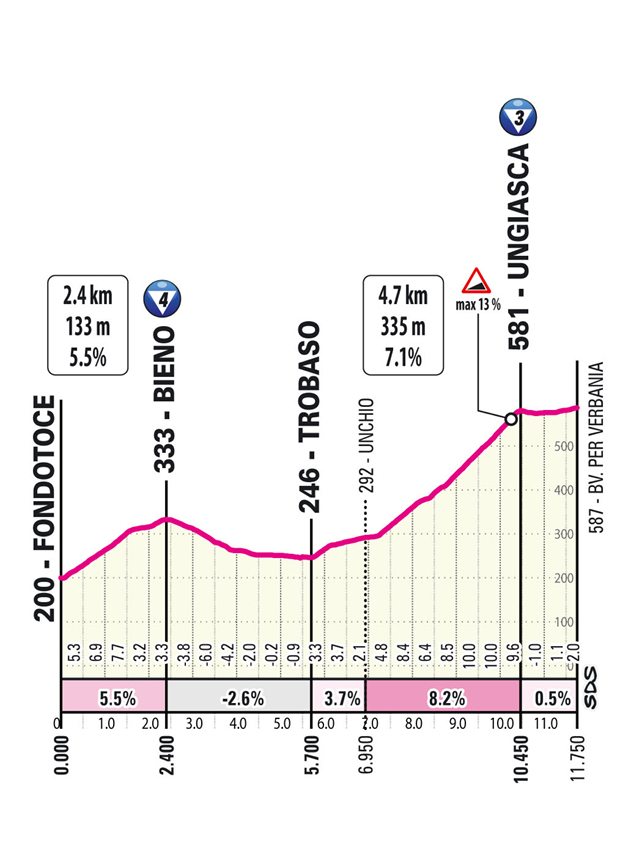
Flat stage for 160 km, becoming suddenly more demanding in the final 30 km, which contain all the elevation gain. The route crosses the Po Valley from south to north, from Alessandria to Lake Maggiore. It follows mostly wide and straight roads and passes through several major towns (Casale Monferrato, Vercelli, etc.), with the usual presence of urban obstacles. After riding along the western shore of Lake Maggiore, a sequence of short climbs begins leading to the finish: first Bieno with manageable gradients, followed by Ungiasca with several kilometres above 10%. A descent then leads to Verbania and the finish.
Final kilometres
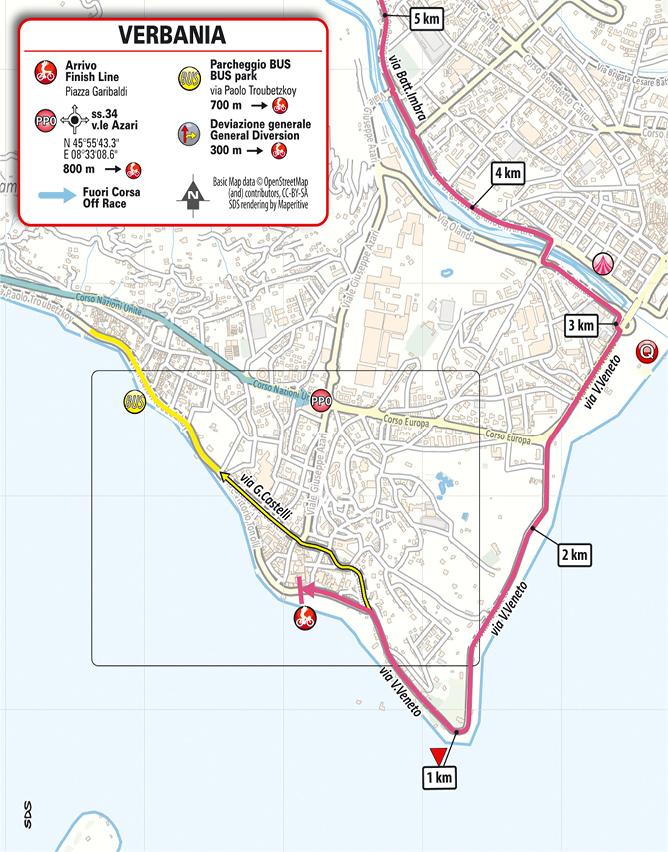
The last 3 km run along the lake. First on a wide, almost straight road, then following the shoreline with some bends and a slight narrowing of the carriageway. Final straight of 300 m on 7 m wide asphalt.

start / finish

climb detail

final kilometres

itinerary timetable

Strava Route

  • profile
  • map
  • technical info
  • start / finish
  • climb detail
  • final kilometres
  • itinerary timetable
  • Strava Route
Save the dates of your favorite races and receive all the informations about the races

tourist info

Host city:

start
finish

Alessandria


Overview

Founded in 1168 as a newly established communal city, Alessandria lies in the Piedmont plain along the Tanaro River, in a historically strategic position between Liguria, Lombardy and Piedmont. Over the centuries it played a key military and administrative role, still evident today in the imposing 18th-century Citadel located on the opposite bank of the river. The urban centre retains a regular layout, with squares and main thoroughfares reflecting the city’s later development. Today, Alessandria is an important provincial capital and a key transport hub in southern Piedmont.

Gastronomy

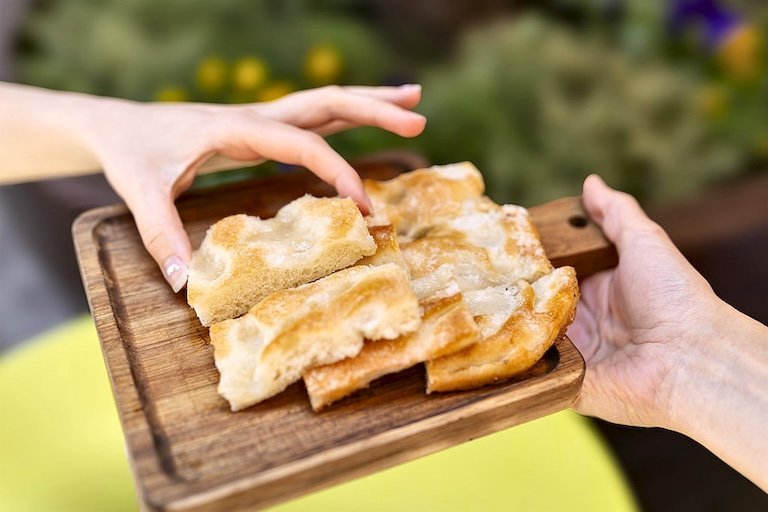
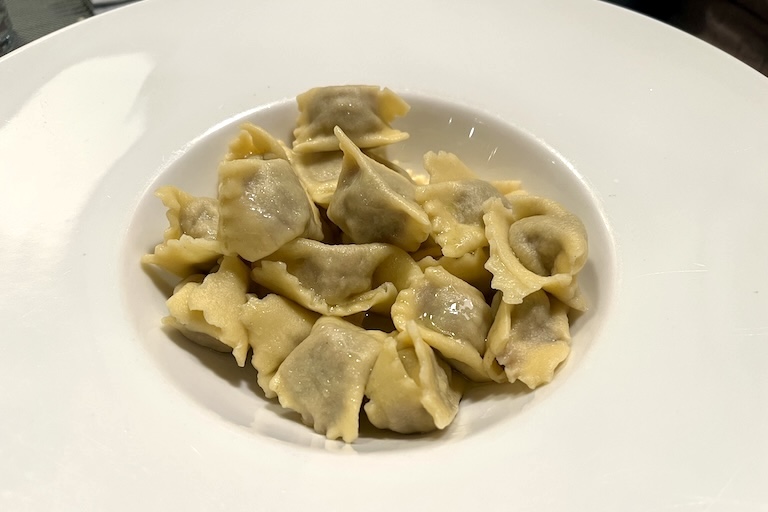
Alessandria’s culinary tradition emerges from the meeting of rural and bourgeois cultures, with a cuisine that celebrates local, seasonal ingredients. The surrounding hills yield prized products such as mushrooms and truffles, both white and black. Among the city’s most distinctive dishes are rabatòn from Litta Parodi, agnolotti alla alessandrina, and pollo alla Marengo, a recipe closely tied to the area’s history. Local specialities are also recognised through Denominazioni Comunali di Origine (De.Co.), including focaccia dolce alessandrina and salamino di vacca della Fraschetta. Alongside these, a refined tradition of sweets and café culture thrives, exemplified by the marocchino, a rich drink made with coffee, frothed milk, and cocoa.

Wine and other drinks

The Alessandria area is renowned for its outstanding winemaking tradition. Among the reds, Barbera, Grignolino, Dolcetto, and Brachetto stand out as classic expressions of the Piedmont hills. Alongside them, two white wines have gained international recognition: Timorasso DOC from the Colli Tortonesi and Gavi DOCG, a true symbol of local viticulture. In recent years, the area has also seen the rise of a dynamic craft beer scene, with local producers offering a fresh interpretation of the territory alongside its well-established wine heritage.

Highlights & Landmarks

Founded in 1168, Alessandria reveals a rich historical layering within its urban fabric. The city centre unfolds around Piazza della Libertà, where notable buildings include the Town Hall, Palatium Vetus, Palazzo Ghillini, and the Palazzo delle Poste e dei Telegrafi, adorned with a mosaic by Gino Severini. Cultural life is centred in venues such as Palazzo Cuttica, home to exhibitions and the conservatory, while the Civic Library houses the Art Rooms, featuring painted cycles inspired by the legends of King Arthur.

A defining landmark is the Cittadella, an imposing 18th-century Savoyard fortress, now a historic monument and public space, connected to the city by a bridge designed by Richard Meier. In the historic centre, the former San Francesco complex has been restored and transformed into a cultural venue.

Alessandria is also closely linked to contemporary culture as the birthplace of Umberto Eco, whose legacy remains an integral part of the city’s identity. Museums such as the Alessandria City of Bicycles Museum, celebrating its cycling heritage, and the Borsalino Museum, dedicated to the iconic hat-making brand, further enrich its cultural landscape.

Alongside its historical and cultural heritage, Alessandria hosts a vibrant calendar of events, including the San Baudolino Fair, cultural festivals, and city-wide celebrations throughout the year, reinforcing its role as a dynamic and lively hub in the Piedmont region.

Verbania


Overview

Overlooking the Piedmontese shore of Lake Maggiore, Verbania was formed in 1939 from the merger of the towns of Intra, Pallanza and Suna. The city stretches along the lakeshore and up the first mountain slopes behind it, set within a landscape of outstanding natural beauty. Historically linked to industrial and manufacturing activities, Verbania has gradually developed a strong tourist vocation, encouraged by its lakeside location and mild climate. Its urban fabric reflects the diversity of its origins, with districts that differ in history and function, and a close relationship with the surrounding Verbano landscape.

Gastronomy

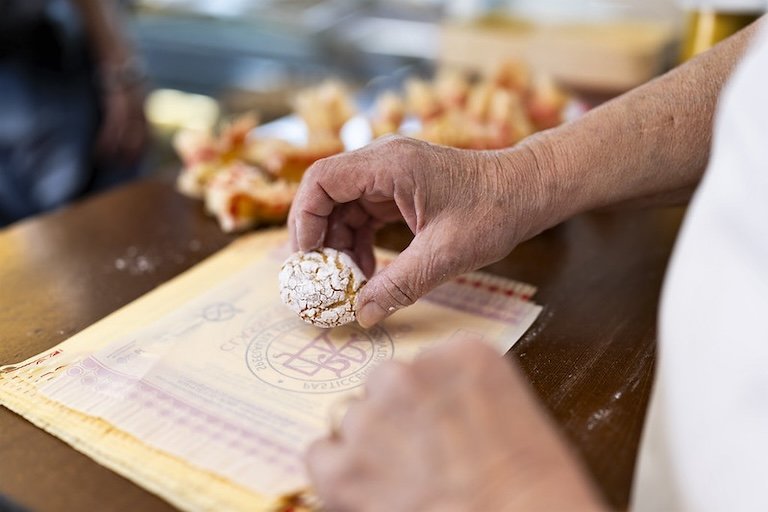
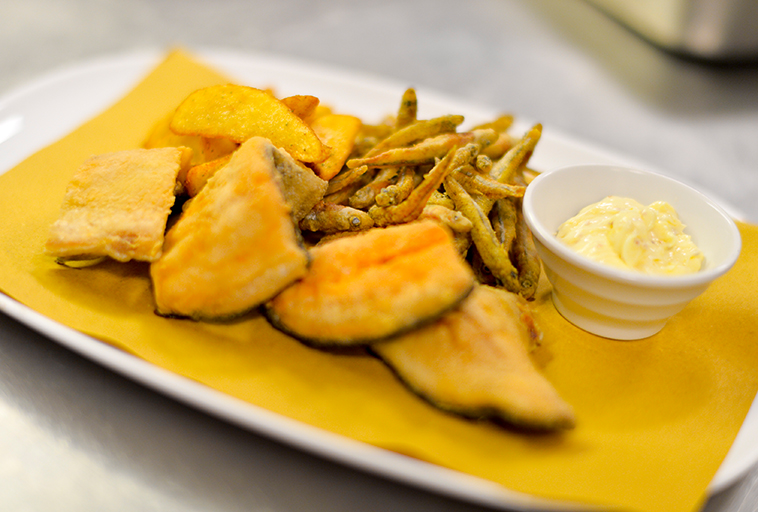
Verbania’s gastronomy is deeply connected to Lake Maggiore and the surrounding Alpine valleys, blending lakeside flavours with mountain traditions. Among its signature dishes are golden fillets of perch, sautéed in butter and sage and often served with rice or polenta, and fritto di alborelle, light and delicately crisp. Grilled coregone and risotto with perch and saffron reflect the meeting of lake cuisine and the rice-growing heritage of Piedmont. From the inland valleys come distinctive specialties such as mortadella ossolana, the violino di capra from Valle Vigezzo, and Bettelmatt, a rare and prized alpine cheese. Local products also include the traditional black bread of Coimo. On the sweet side, the area is known for amaretti di Pallanza and the delicate margheritine di Stresa, completing a cuisine that captures the essence of both water and mountains.

Wine and other drinks

The Verbano-Cusio-Ossola area offers a niche yet highly distinctive winemaking tradition. Among its standout varieties is Prünent, an ancient native grape documented as far back as the 14th century and now revived within the Valli Ossolane DOC. Alongside these local productions, the region also draws on renowned Piedmontese wines, while a lively craft beer scene adds a modern dimension to its beverage culture. Typical drinks include pure Alpine waters such as Acqua di Bognanco, as well as iconic products like Crodino, born in Crodo – both integral expressions of the area’s unique identity.

Highlights & Landmarks

Verbania’s heritage unfolds in a unique balance between lakeside landscapes, culture, and nature. Among its most iconic sites are the Villa Taranto Botanical Gardens, one of Europe’s most important botanical complexes, home to thousands of plant species and spectacular seasonal blooms overlooking Lake Maggiore. In the heart of the city, the Landscape Museum, housed in Palazzo Viani Dugnani, preserves works connected to the region from the 19th and 20th centuries, with international recognition.

Among the religious landmarks, the Basilica of San Vittore stands as a key spiritual and historical reference point. Nearby, the Sacri Monti of Piedmont and Lombardy, a UNESCO World Heritage Site, offer immersive routes through art, faith, and landscape. Equally captivating are the Borromean Islands, a lake archipelago renowned for its baroque palaces and terraced gardens.

The city’s cultural scene is further enriched by Villa Giulia, now a venue for major exhibitions and artistic events, and the Il Maggiore Events Centre, a contemporary hub for theatre, music, and performance. At Villa Maioni, visitors can explore the so-called “Camellia Library,” a botanical park featuring hundreds of varieties.

From a natural perspective, highlights include the Fondo Toce Nature Reserve, a protected wetland of exceptional biodiversity, and the Val Grande National Park, Italy’s largest wilderness area, offering untouched landscapes and extensive hiking trails.

Follow us
#giroditalia

top sponsor

institutional partners

official suppliers

official licensees