

profile
map
technical info
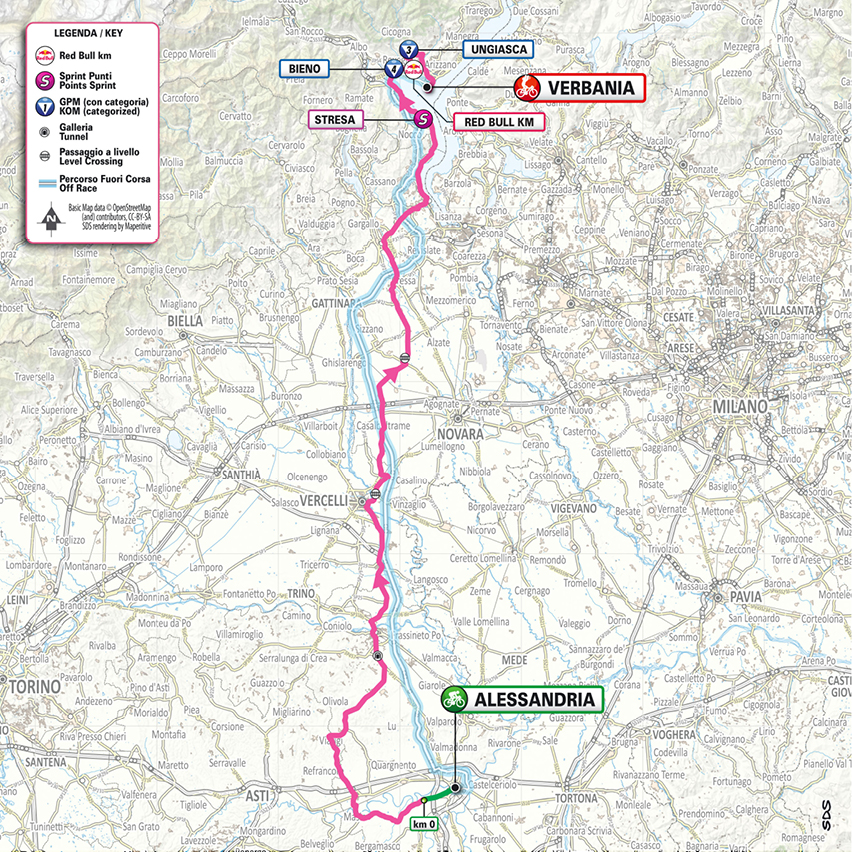
Route
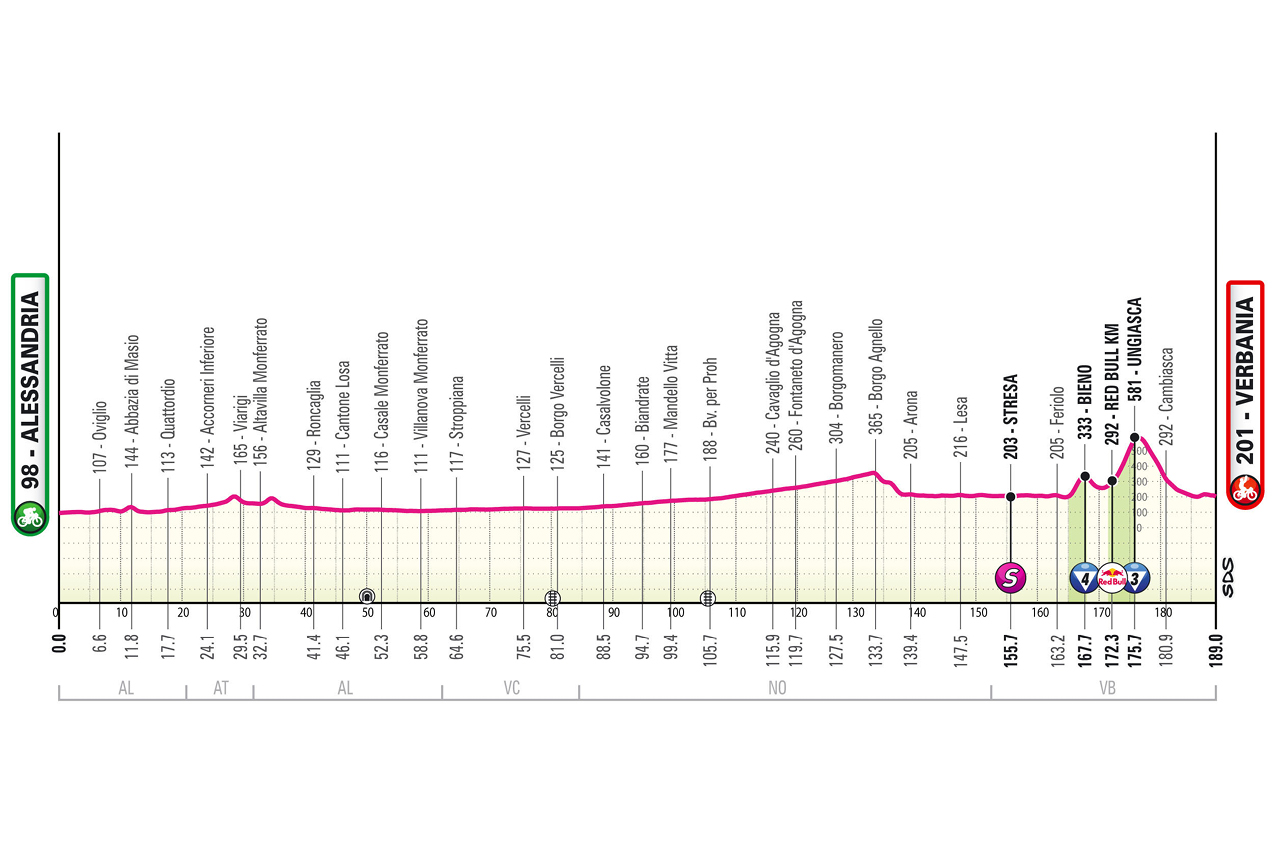
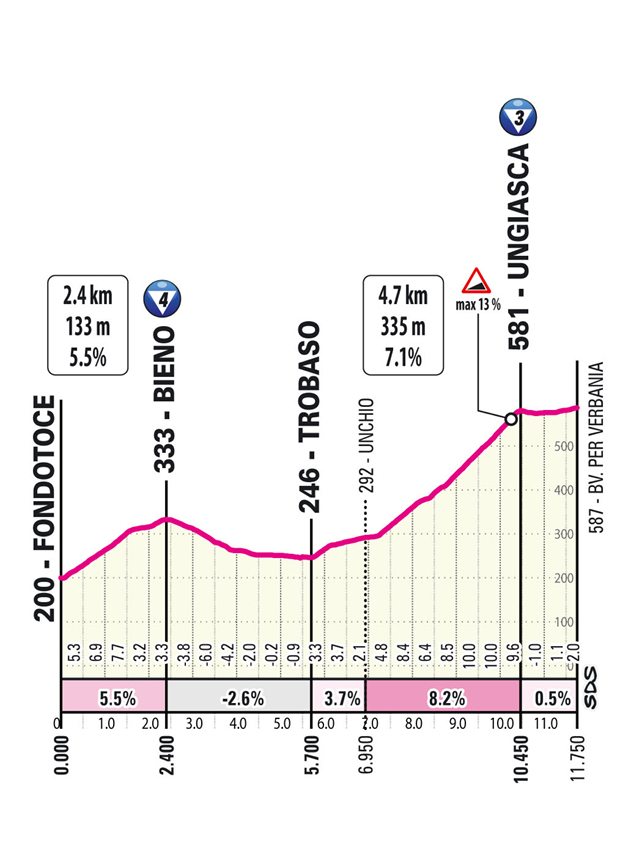
Flat stage for 160 km, becoming suddenly more demanding in the final 30 km, which contain all the elevation gain. The route crosses the Po Valley from south to north, from Alessandria to Lake Maggiore. It follows mostly wide and straight roads and passes through several major towns (Casale Monferrato, Vercelli, etc.), with the usual presence of urban obstacles. After riding along the western shore of Lake Maggiore, a sequence of short climbs begins leading to the finish: first Bieno with manageable gradients, followed by Ungiasca with several kilometres above 10%. A descent then leads to Verbania and the finish.
Final kilometres
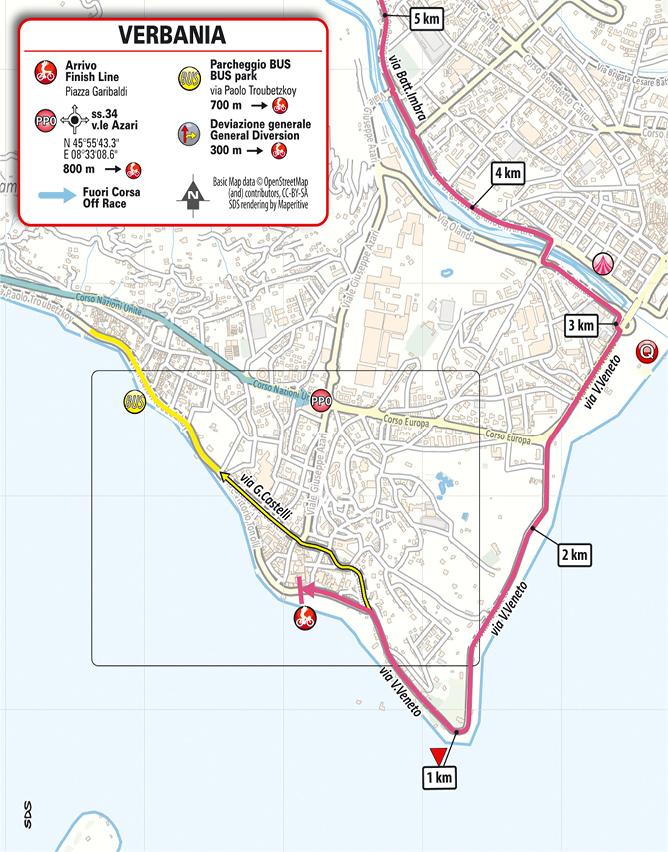
The last 3 km run along the lake. First on a wide, almost straight road, then following the shoreline with some bends and a slight narrowing of the carriageway. Final straight of 300 m on 7 m wide asphalt.
start / finish

climb detail
final kilometres

itinerary timetable

tourist info
Host city:
Alessandria
Overview
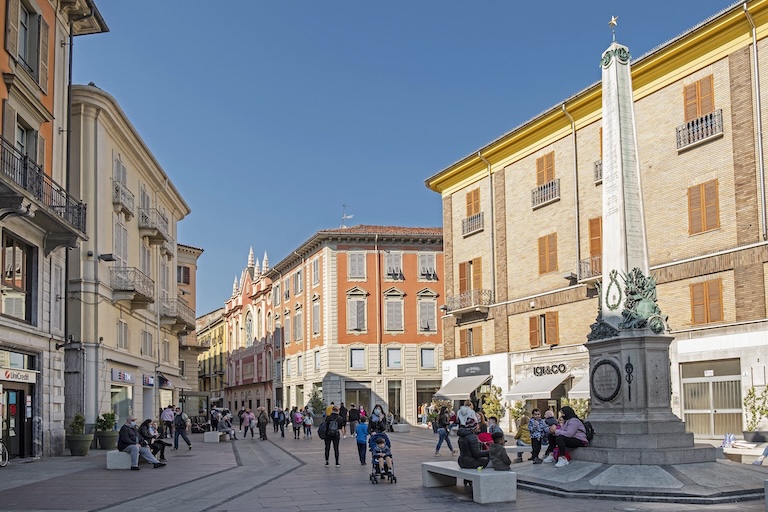
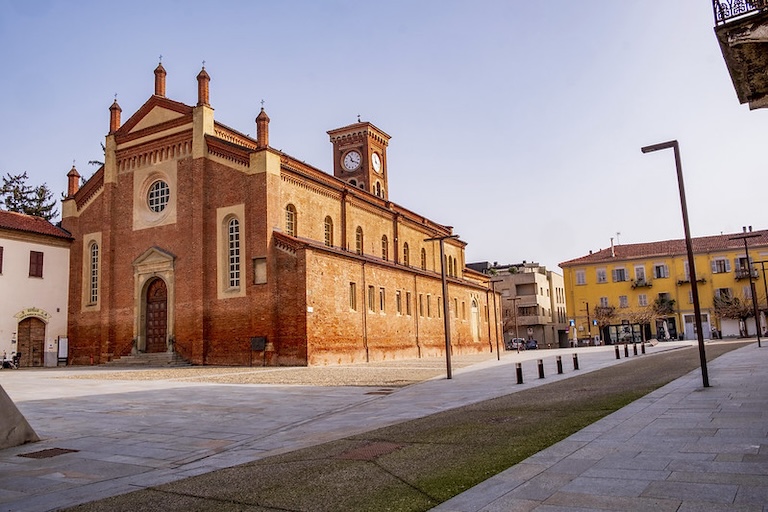
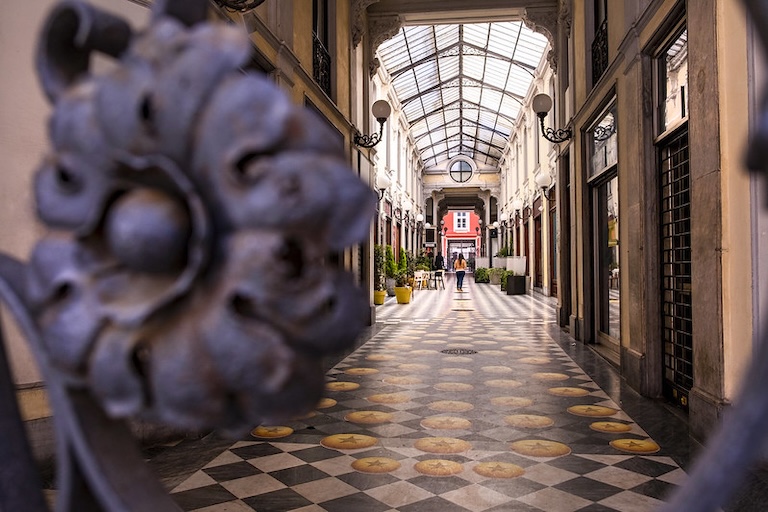
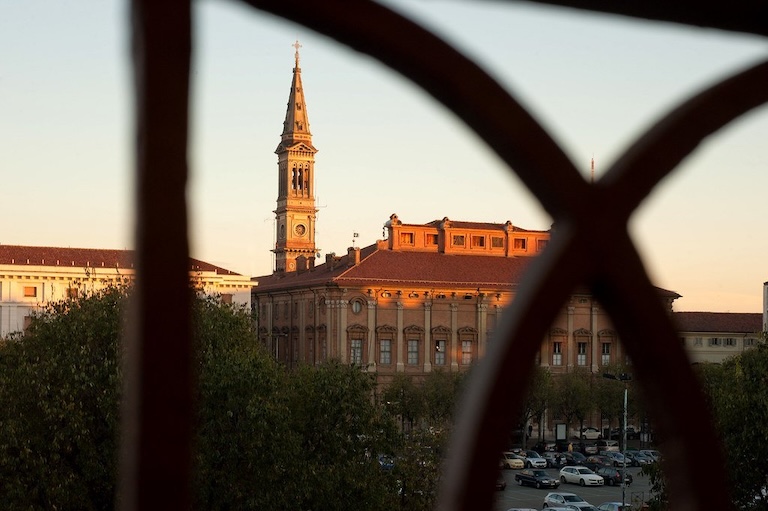
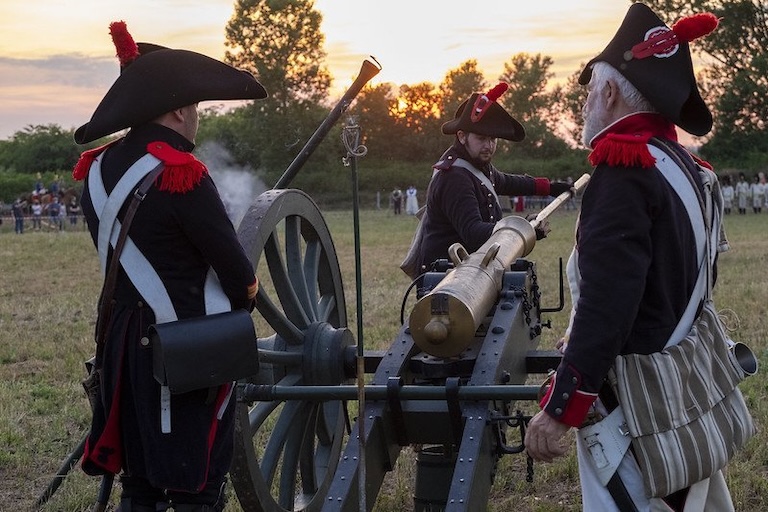
Founded in 1168 as a newly established communal city, Alessandria lies in the Piedmont plain along the Tanaro River, in a historically strategic position between Liguria, Lombardy and Piedmont. Over the centuries it played a key military and administrative role, still evident today in the imposing 18th-century Citadel located on the opposite bank of the river. The urban centre retains a regular layout, with squares and main thoroughfares reflecting the city’s later development. Today, Alessandria is an important provincial capital and a key transport hub in southern Piedmont.
Gastronomy
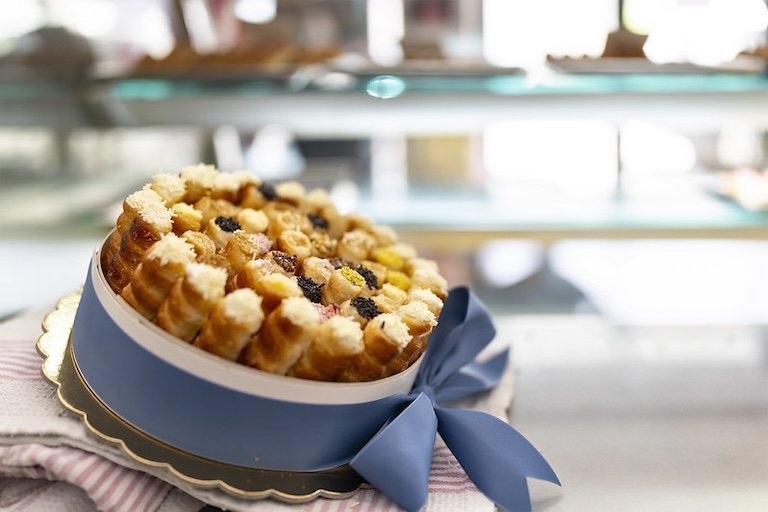
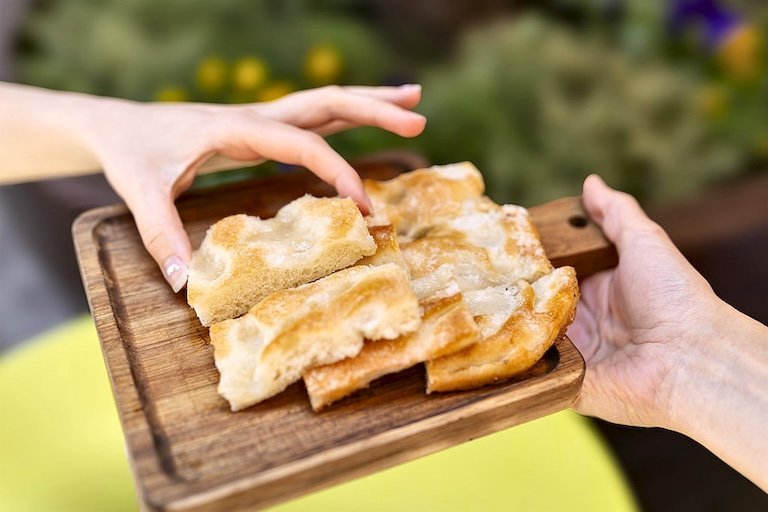
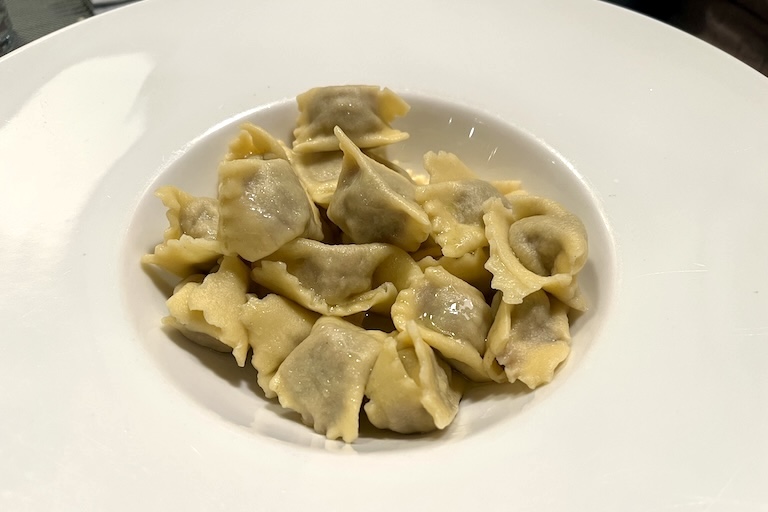
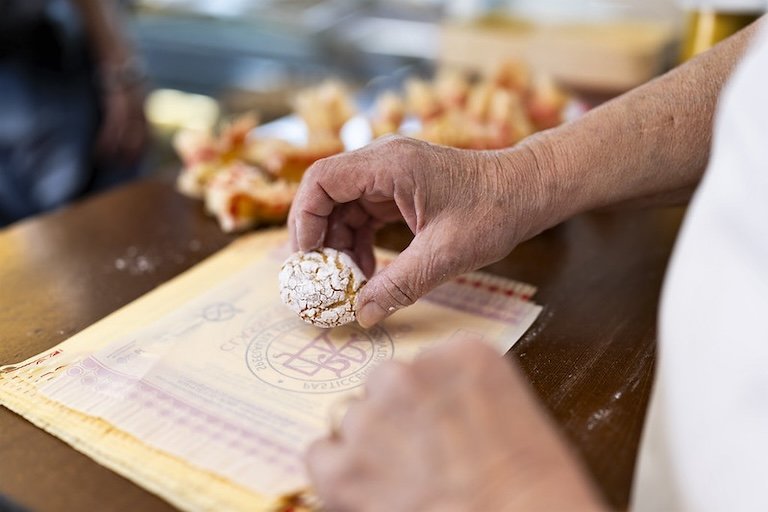
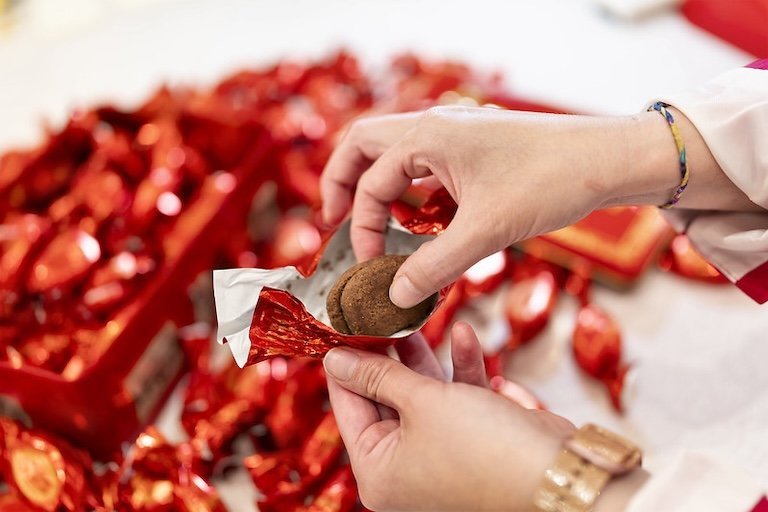
Alessandria’s culinary tradition emerges from the meeting of rural and bourgeois cultures, with a cuisine that celebrates local, seasonal ingredients. The surrounding hills yield prized products such as mushrooms and truffles, both white and black. Among the city’s most distinctive dishes are rabatòn from Litta Parodi, agnolotti alla alessandrina, and pollo alla Marengo, a recipe closely tied to the area’s history. Local specialities are also recognised through Denominazioni Comunali di Origine (De.Co.), including focaccia dolce alessandrina and salamino di vacca della Fraschetta. Alongside these, a refined tradition of sweets and café culture thrives, exemplified by the marocchino, a rich drink made with coffee, frothed milk, and cocoa.
Wine and other drinks
The Alessandria area is renowned for its outstanding winemaking tradition. Among the reds, Barbera, Grignolino, Dolcetto, and Brachetto stand out as classic expressions of the Piedmont hills. Alongside them, two white wines have gained international recognition: Timorasso DOC from the Colli Tortonesi and Gavi DOCG, a true symbol of local viticulture. In recent years, the area has also seen the rise of a dynamic craft beer scene, with local producers offering a fresh interpretation of the territory alongside its well-established wine heritage.
Highlights & Landmarks
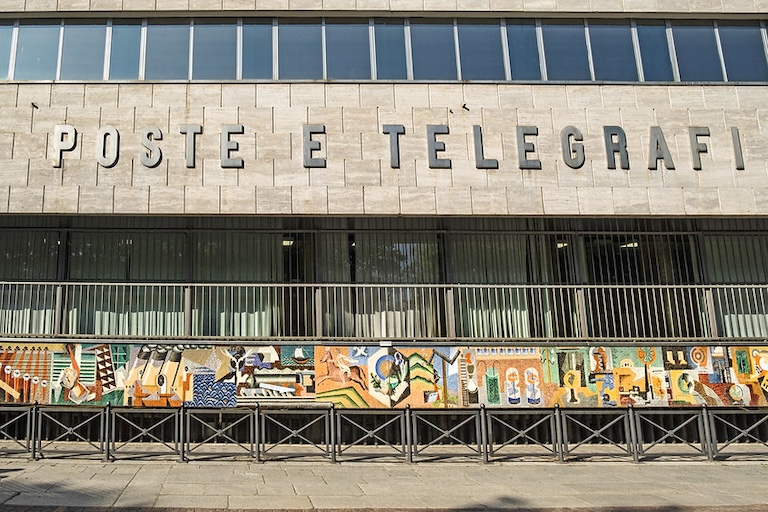
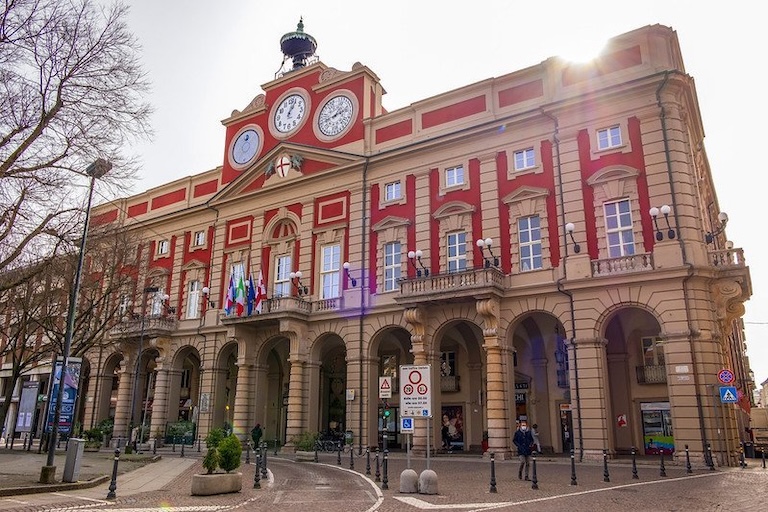
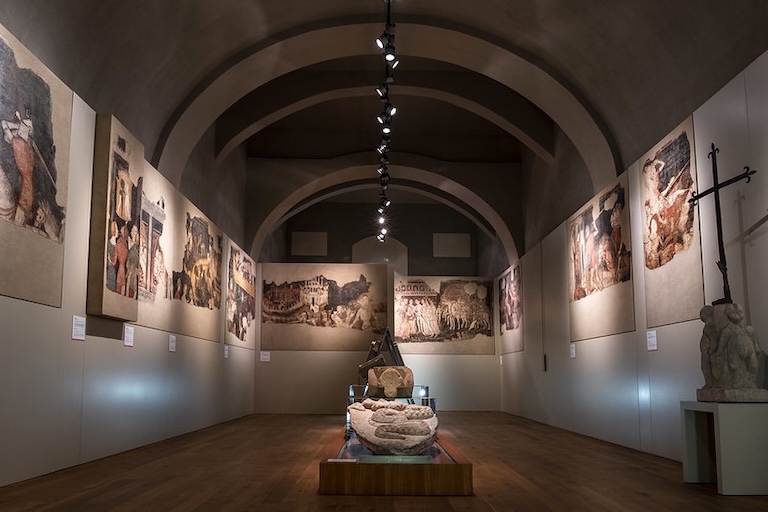
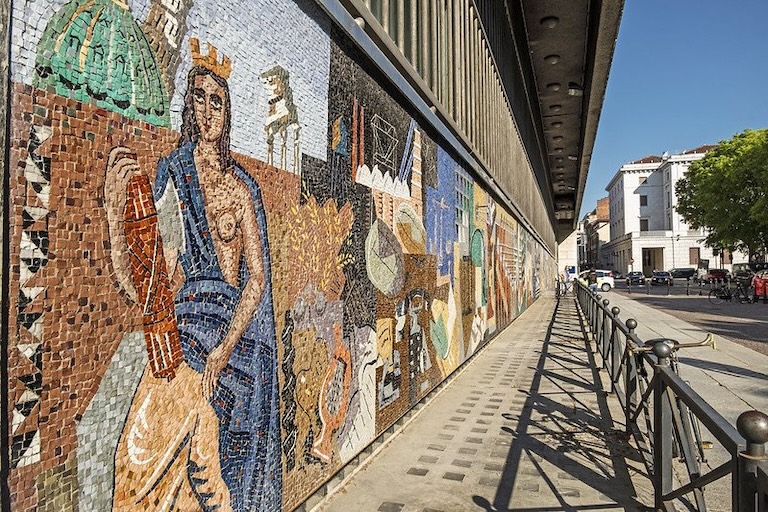
Founded in 1168, Alessandria reveals a rich historical layering within its urban fabric. The city centre unfolds around Piazza della Libertà, where notable buildings include the Town Hall, Palatium Vetus, Palazzo Ghillini, and the Palazzo delle Poste e dei Telegrafi, adorned with a mosaic by Gino Severini. Cultural life is centred in venues such as Palazzo Cuttica, home to exhibitions and the conservatory, while the Civic Library houses the Art Rooms, featuring painted cycles inspired by the legends of King Arthur.
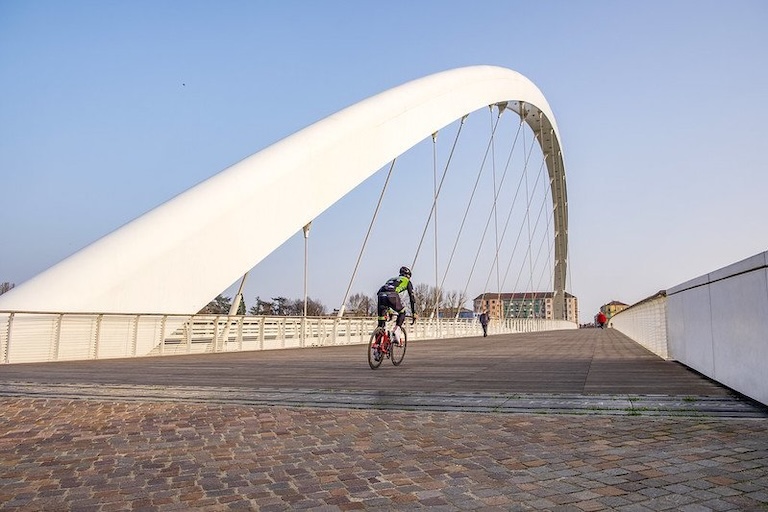
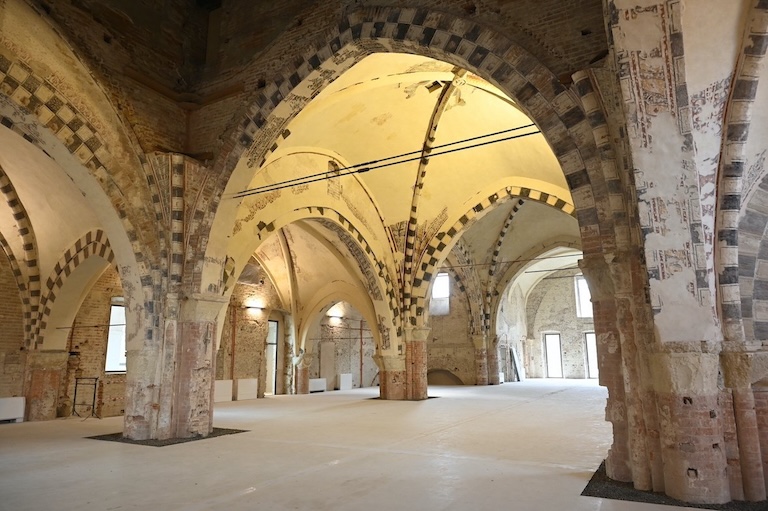
A defining landmark is the Cittadella, an imposing 18th-century Savoyard fortress, now a historic monument and public space, connected to the city by a bridge designed by Richard Meier. In the historic centre, the former San Francesco complex has been restored and transformed into a cultural venue.
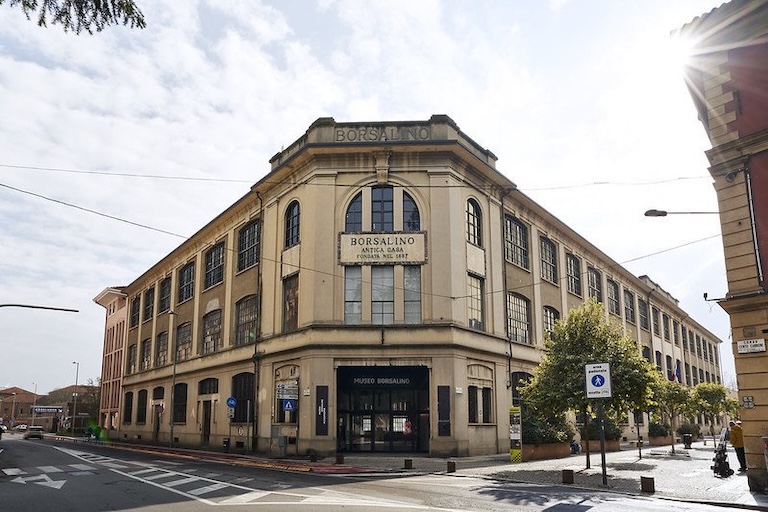
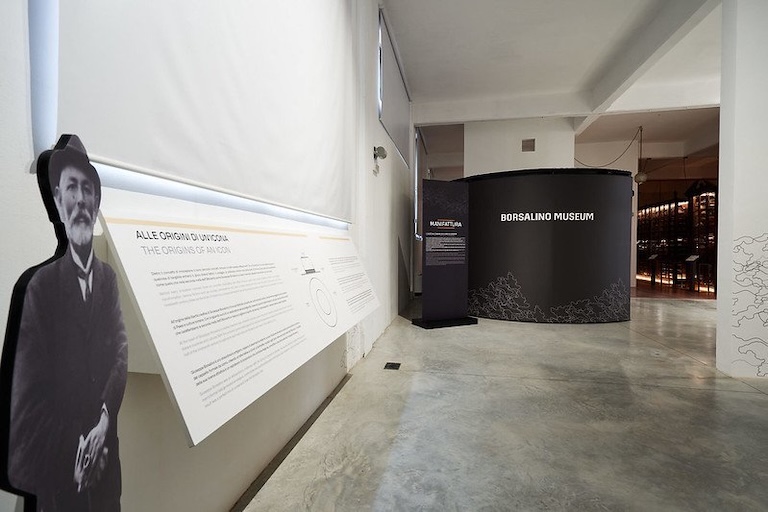
Alessandria is also closely linked to contemporary culture as the birthplace of Umberto Eco, whose legacy remains an integral part of the city’s identity. Museums such as the Alessandria City of Bicycles Museum, celebrating its cycling heritage, and the Borsalino Museum, dedicated to the iconic hat-making brand, further enrich its cultural landscape.
Alongside its historical and cultural heritage, Alessandria hosts a vibrant calendar of events, including the San Baudolino Fair, cultural festivals, and city-wide celebrations throughout the year, reinforcing its role as a dynamic and lively hub in the Piedmont region.
Verbania
Overview
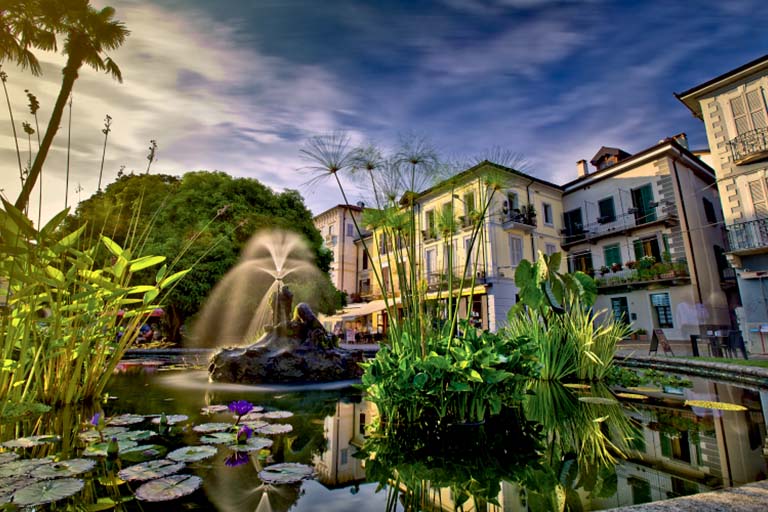
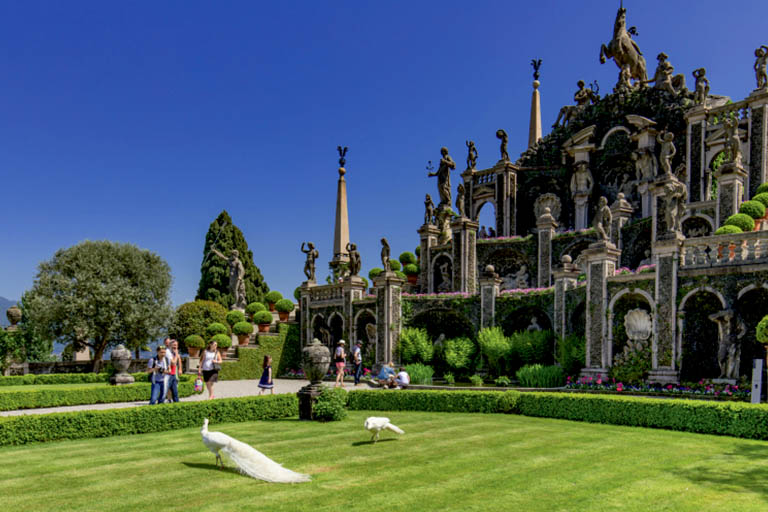
Verbania is a municipality founded in 1939 when the two pre-existing municipalities of Pallanza and Intra were unified. The town has been the capital of the Province of Verbano Cusio Ossola since 1992. Its territory stretches along the Piedmontese shore of Lake Maggiore, on the Borromeo Gulf, and extends up into the surrounding hills that rise gently up towards the alpine peaks. Lake, hills and mountains constitute the rich proposal of Verbania where you can enjoy a boat trip to the Borromeo Islands, a visit to the stately botanical gardens of Villa Taranto in the center of the city, hiking in the hills, in natural parks or an alpine trekking on Monte Rosa and in the Ossola Valleys. During the 19th century Verbania became the destination of an international élite tourism and the summer residence of the aristocracy and upper classes that led to the opening of the first hotels and the building of sumptuous villas with garden. The city was also the protagonist of an important industrial development and for over a century industry has been the economic base of the whole region. With the crisis of the 70s and 80s Verbania had to win an important challenge and rediscover its natural vocation linked to tourism, trade, craftsmanship, tertiary and floriculture. Today the city is an international tourist destination offering its visitors a wide choice of natural and cultural attractions, a rich program of events and a wide range of accommodation facilities.


Speciality food
Thanks to the winning combination of the gastronomic excellences of lake and mountain, Verbania offers a variety of flavors which it is difficult to resist. For those who love lake fish, unmissable is the experience of a perch, served in exquisite fillets or added as a refined ingredient to a dish of rice; another gastronomic experience is a dish of fried “alborelle” (small fish) or the carpione (fish cooked in vinegar) made with the catch of the day. The typical dishes also include rice, cultivated in the nearby rice fields of Novara and Vercelli, often served in combination with lake fish or in the “Milanese” variant with saffron, which is now cultivated on the hills surrounding Verbania. The Ossola Valley offers a wide choice of salami and dry meats: Mortadella Ossolana, the Valle Vigezzo Ham and Goat Violin (goat thigh and shoulder), the lard at the herbs of Macugnaga, the Mocetta and the Bresaola. Among the local cheeses of mountain pasture, the most renowned is the Bettelmatt whose forms are sold at auction. Numerous and fine the varieties of honeys of the territory: chestnut honey, robinia honey, linden honey, rhododendron honey, to name a few. Honey, cheese, salami and dry meats are served with slices of “black bread” (rye bread) the most famous of which is the Black Bread of Coimo. Verbania typical cookies are: Amaretti di Pallanza (almond cookies) and Intresine, butter biscuits with almonds and hazelnuts. Other famous cookies of the area are: Margheritine di Stresa (butter cookies invented by the pastry chefs of Stresa on the occasion of the first communion of Margherita di Savoia, future queen of Italy) and the Fugascina of Mergozzo (sort of thin shortbread). A wide range of restaurants (two of them awarded with the prestigious Michelin stars), pizzerias, trattorias and farmhouse restaurants invite you to discover the local gastronomy and make the stay more enjoyable.
Drinks
In addition to the famous and valuable wines of the Piedmontese tradition (Barbera, Barolo, Nebbiolo), the territory of Verbano Cusio Ossola offers some local wines produced from the terraced vineyards of the Ossola Valley. Viticulture in Ossola Valley means traditionally Prünent, a local vine similar to Nebbiolo vine whose presence in Ossola has has been historically testified on documents dating back to 14th century. The most popular Ossola wines are: Prünent, Ca’ D’Maté, Baloss, Ossolanum, Tarlap, Cà d’Susana. Under the label Ossola Valli Doc it is possible to produce four different kinds of wines: Valli Ossolane DOC Nebbiolo Superior, Valli Ossolane DOC Nebbiolo, Valli Ossolane DOC Red, Valli Ossolane DOC White. Beer lovers can enjoy quality and niche beers produced by small artisan brewers which offer: spicy beers, mint-flavored beers, beers enriched with rye cultivated in Ossola Valley, or with corn or chestnut honey. The territory of Verbano Cusio Ossola also provide a wide choice of mineral waters (Bognanco, Crodo, Vigezzo) without forgetting the Crodino, the famous non-alcoholic aperitif “invented” and produced in Crodo and launched on the Italian market in 1964.
Main sights
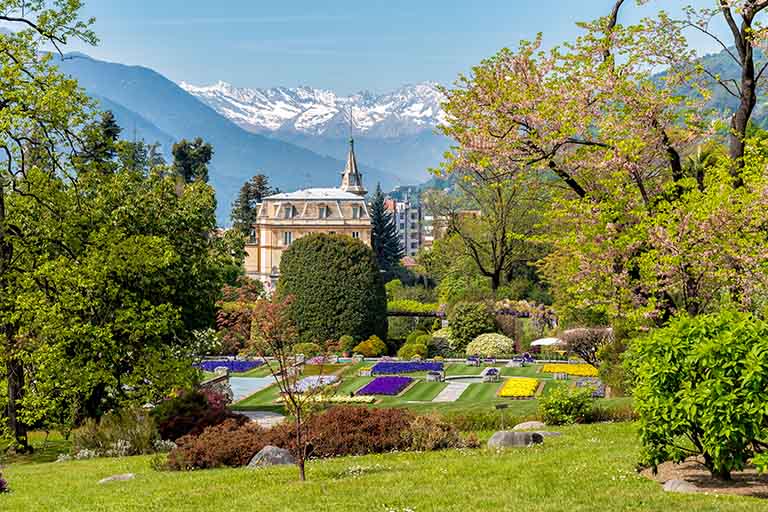
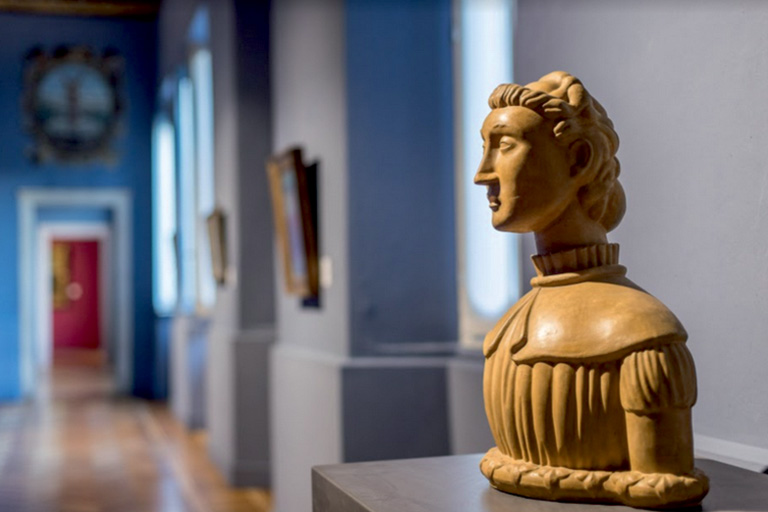
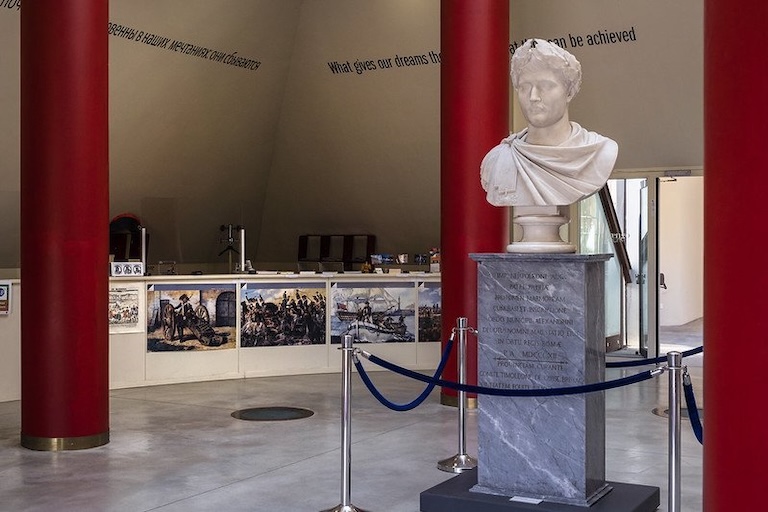
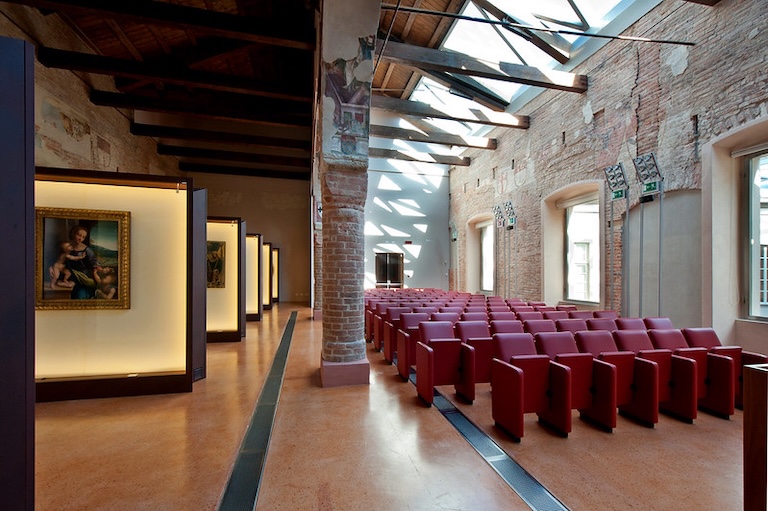
The landscape, with its gardens and parks, is the main attraction of Verbania. The gorgeous Borromean Islands are easily reachable by boat; in the center of the town the Botanical Gardens of Villa Taranto cover an area of about 16 hectares and have a botanical heritage of over 20,000 species of plants from all over the world. Villa Giulia, public park and seat of exhibitions and events, Villa Maioni seat of the Civic Library and Villa San Remigio on the Castagnola promontory are some of the villas that connote the city with their gardens. In Verbania we also find the Natural Park of Fondo Toce, the largest wetland of Lake Maggiore and, in the immediate hinterland, the National Park Val Grande, the largest wilderness area in Italy. Verbania, finalist city for the title of Italian Capital of Culture 2022, and its territory propose prestigious musical and performing arts festivals such as the International Stresa Festival and Tones on the Stones a festival which takes place in the local granite and marble quarries. The futuristic Il Maggiore Events Center, designed by an international team led by Architect Salvador Perez Arroyo and inaugurated in 2016, offers a world-class theater season. The Landscape Museum, housed in the prestigious Palace Viani Dugnani, exhibits the most significant collection of works of art of Lake Maggiore, from the late 19th century to the early 20th century, by artists of international fame such as Paolo Troubetzkoy, Arturo Martini and Mario Tozzi. Verbania’s religious buildings are tangible signs of sacred art: the recently restored basilica of San Vittore, the romanesque oratory of San Remigio, the church of Madonna di Campagna and, in the immediate vicinity of Verbania, the Sacred Mountains (Sacri Monti), declared World Heritage Sites by UNESCO. To sport lovers the lake offers the opportunity to practice water sports, especially sailing, surfing, canoeing and rowing. Verbania is the native town of Beniamino “Bebo” Bonomi world and Olympic canoe champion (gold medal in Sydney 2000). Verbania is also the birthplace of the world speed skiing champion, Valentina Greggio and of the four-times world cycling champion in individual pursuit Filippo Ganna, also winner of four stages at the Giro d’Italia 2020. The city has been for years a charming location for marathons and sporting events. A series of events linked to the horticultural tradition of the city, such as the Camellia Show and Editoria&Giardini a book fair consacrated to garden, complete the program of initiatives that covers the whole year.