






profile
map
technical info
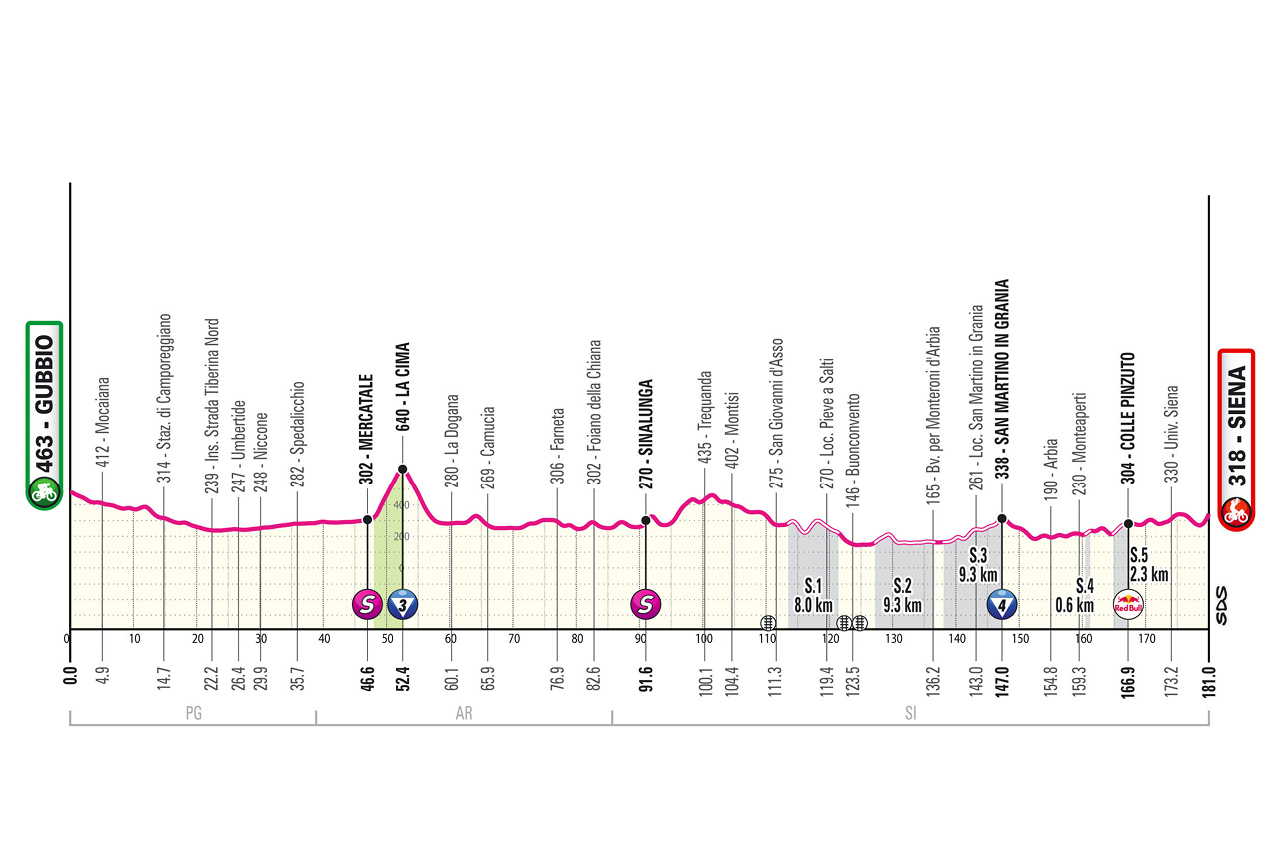
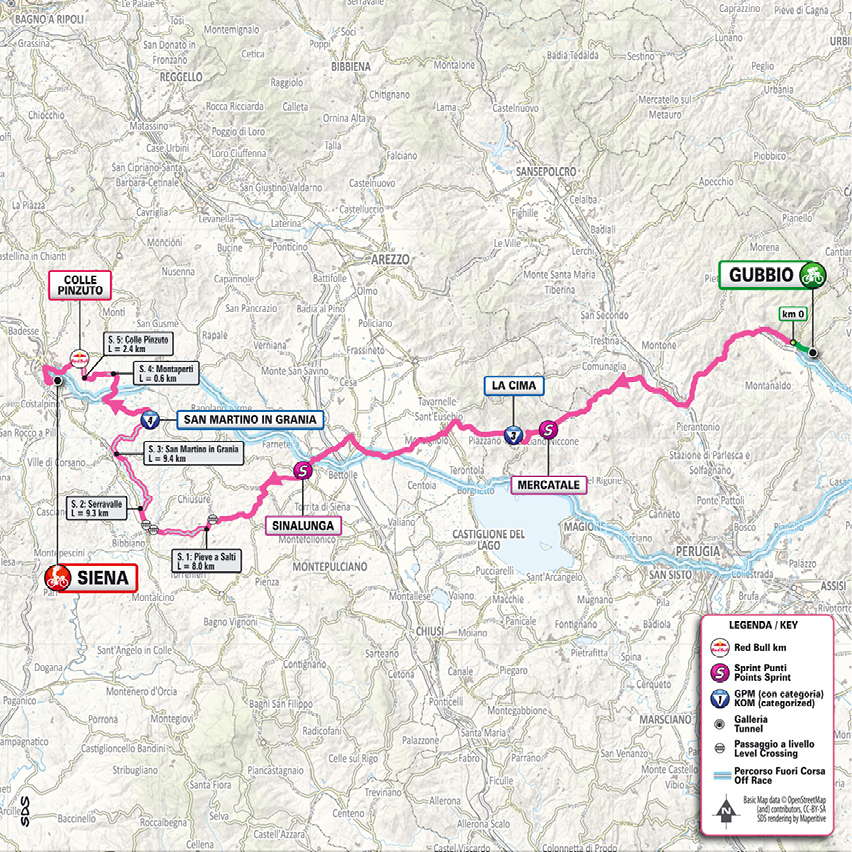
Gravel stage featuring around 29 km of unpaved roads. Riders approach the Sienese region via Cortona and Sinalunga on relatively wide roads with lots of changes in gradient and direction. After San Giovanni d’Asso, the peloton hits the Pieve a Salti sector (8 km): tough, rolling, and full of curves. After a second pass through Buonconvento, they face Serravalle (9.3 km), which links directly into San Martino in Grania (9.4 km). The Monteaperti sector is just 600 m but includes double-digit gradients. Asphalt returns briefly before the final gravel at Colle Pinzuto (2.4 km, max 15%). Then it’s on to Siena.
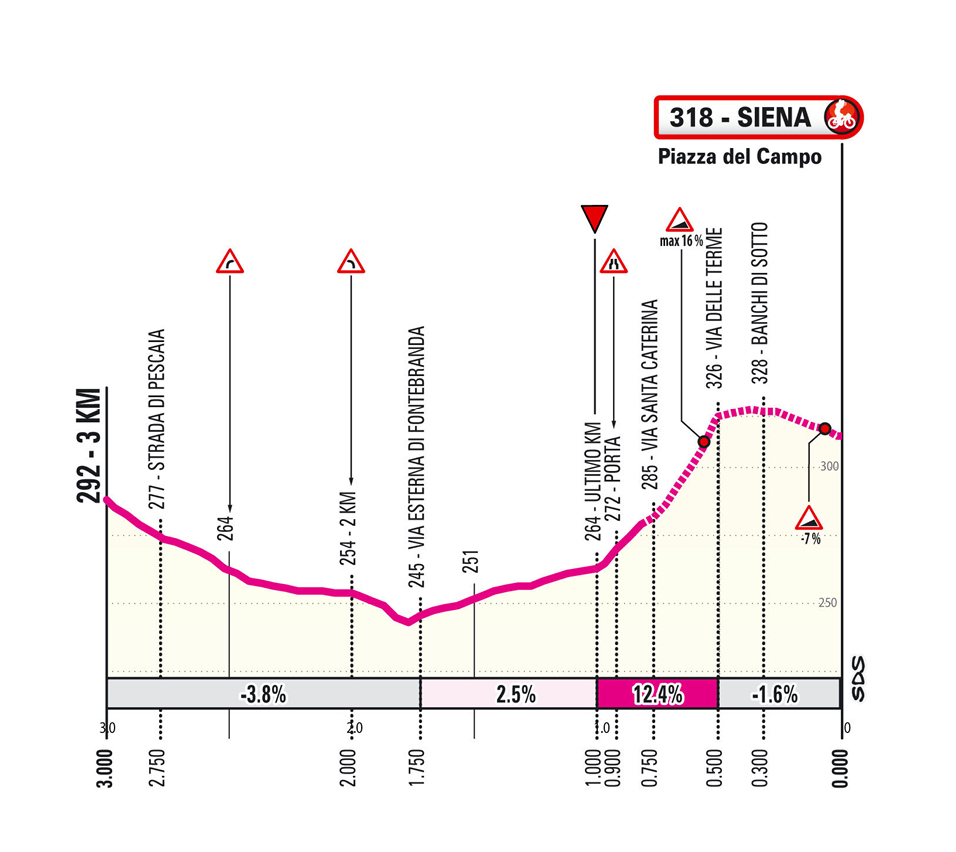
Final kilometres
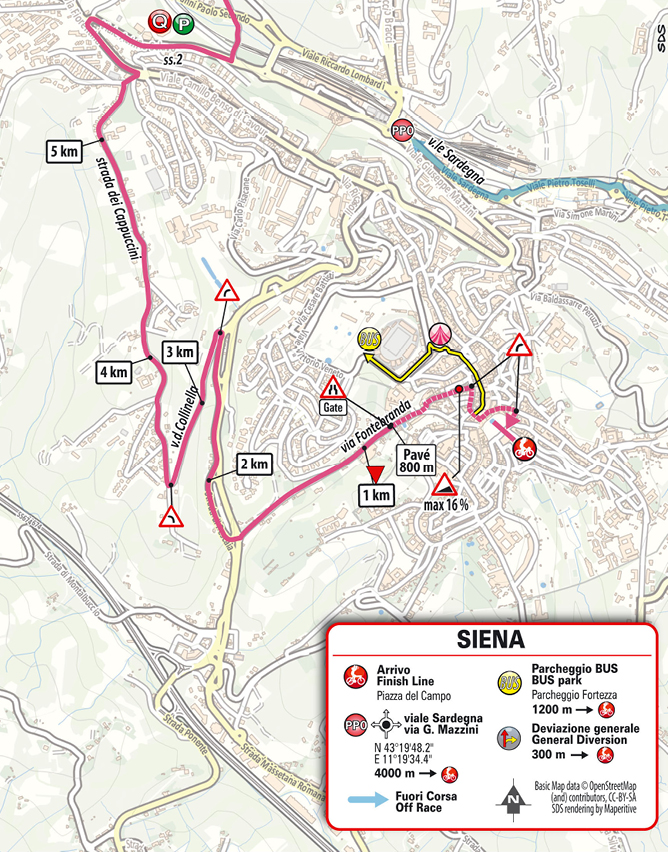
Early parts are outside Siena on wide, sweeping roads, descending then rising to 2 km out. The route climbs Via Esterna di Fontebranda (up to 9%), enters through Porta di Fontebranda at 900 m, and hits cobbles. Gradients exceed 10%, peaking at 16% around 500 m to go on Via Santa Caterina. A sharp right into Via delle Terme, then Via Banchi di Sotto, and a slight downhill from 300 to 150 m. A final right into Via Rinaldini leads into Piazza del Campo. The last 30 m descend at 7%, with a flat finish.
start / finish

final kilometres
itinerary timetable

tourist info
Host city:
Gubbio
Overview
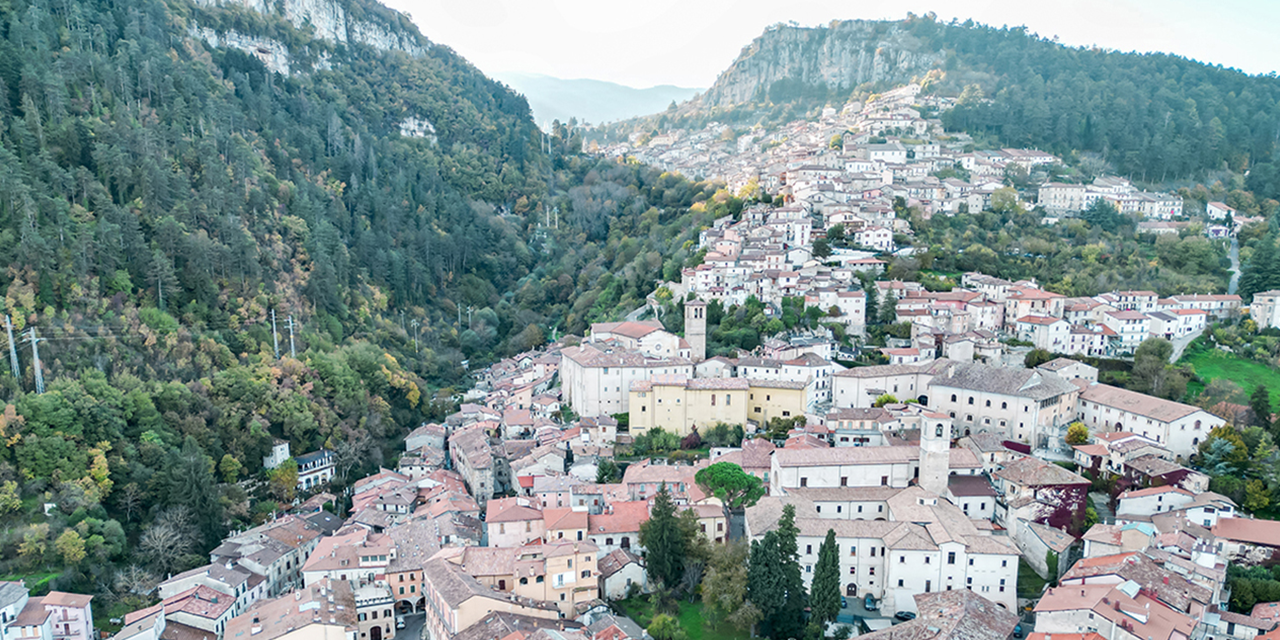
Gubbio, in Umbria, nestled at the foot of Monte Ingino, retains an authentic medieval soul. Its cobbled streets, the majestic Palazzo dei Consoli, and the evocative Corsa dei Ceri make it a true gem of Umbria. The atmosphere is both intimate and solemn, with scenic views that tell ancient stories and a landscape that gently embraces the town, making it feel like a place frozen in time.


Gastronomy
The local cuisine is a triumph of genuine ingredients, simple preparations, and intense flavors capable of satisfying even the most demanding palates. Crescia is undoubtedly the queen of the Eugubian table. It is a type of flatbread made from wheat flour, water, salt, and lard, cooked on a cast-iron griddle called a “testo.” Crescia can be filled in countless ways, with cured meats, cheeses, grilled vegetables, wild herbs, or the traditional “friccò.” Friccò is a rich and hearty dish made with chicken, lamb, rabbit, and sometimes pork. The meat is cut into pieces, browned in a pan with oil and onion, and then slowly cooked with tomatoes, carrots, celery, and spices. The result is a stew with a deep and enveloping flavor, perfect for cold winter days.
Then there is Brustengo, a type of fried bread made with corn flour, water, salt, and sometimes grated cheese. The batter is fried until golden and can be enjoyed hot or cold as an appetizer or snack. Ciambelotto is a traditional cake typical of the Gubbio area. It is a ring-shaped cake made with flour, sugar, eggs, oil, and natural flavorings, perfect for breakfast or as an afternoon treat, paired with a glass of milk or coffee.
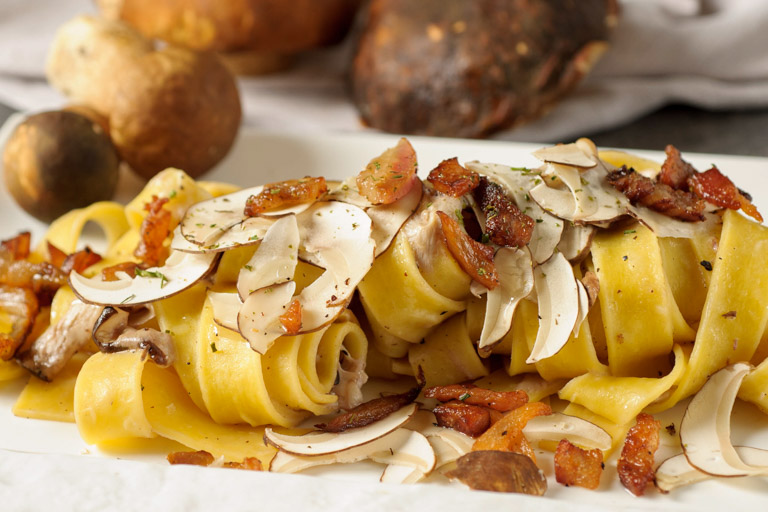
Baccalà alla ceraiola is a signature dish of Gubbio, made with desalted cod, flour, eggs, breadcrumbs, garlic, parsley, and spices. The cod is breaded and fried, then served with a sauce made from tomatoes, onions, olives, and capers. Gubbio is also known for its abundance of truffles, both black and prized white. Truffles are used to enhance many dishes, including tagliatelle and passatelli, a type of fresh pasta made with breadcrumbs, eggs, parmesan, and lemon zest, cooked in meat broth.
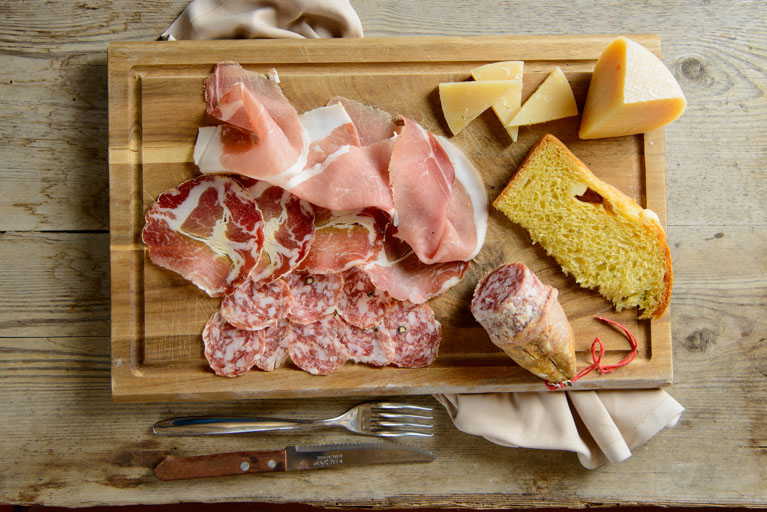
Finally, the art of pork curing is another excellence of Eugubian gastronomy. Cured meats such as prosciutto, sausages, capocollo, and pancetta are prepared with high-quality pork, following ancient artisanal traditions.






Wine and beverages
Amaro Monte Ingino is a digestive liqueur produced by the Morelli Distillery in Gubbio, Umbria. This high-quality artisanal amaro is obtained by distilling fine herbs in copper stills, with saffron as a key ingredient, giving it a unique golden color. Nebbiolo, on the other hand, is a black grape variety, one of the most prestigious and renowned in Italy, famous for producing wines of great structure and elegance, such as Barolo and Barbaresco in the Langhe region of Piedmont. It was introduced to the Gubbio area around 1860, after the unification of Italy, by wealthy Piedmontese landowners. Amaro Monte Ingino, with its complex and refined taste, pairs perfectly with dark chocolate desserts, gelato, and fruit salads. Nebbiolo, instead, is ideally matched with red meat dishes, game, aged cheeses, and traditional Umbrian cuisine.
Points of interest
Gubbio boasts a historical and artistic heritage of extraordinary value. Palazzo dei Consoli, an imposing 14th-century Gothic building, is one of the city’s most iconic landmarks. Its grand facade dominates Piazza Grande, one of Italy’s first suspended squares, offering breathtaking views of the valley below. Inside the palace is the Museo Civico, home to the famous Tavole Eugubine, crucial artifacts for understanding the ancient Umbrian language.
A short walk from Piazza Grande stands Palazzo Ducale, built in the 15th century by Duke Federico da Montefeltro. Inspired by elegant Renaissance residences, the palace features a refined internal courtyard and preserves valuable architectural elements, including the famous wooden studiolo, a replica of the one found in the Palazzo Ducale of Urbino.
The Roman Theater, located just outside the historic center, is a testament to Gubbio’s significance in Roman times. Dating back to the 1st century BC, it is still used today for performances and reenactments, offering visitors a fascinating journey through history.
The city’s neighborhoods retain their medieval structure, telling Gubbio’s story through their characteristic alleys, stone houses, and numerous churches. Strolling through the districts of San Martino, San Pietro, Sant’Andrea, and San Giuliano is an opportunity to immerse oneself in an authentic and timeless atmosphere.
Finally, the Cathedral of Saints Mariano and Giacomo stands as the city’s spiritual heart. Built in the 13th century, the church features a simple yet refined facade, while inside, visitors can admire Renaissance frescoes and a grand 17th-century organ.


Siena
Overview
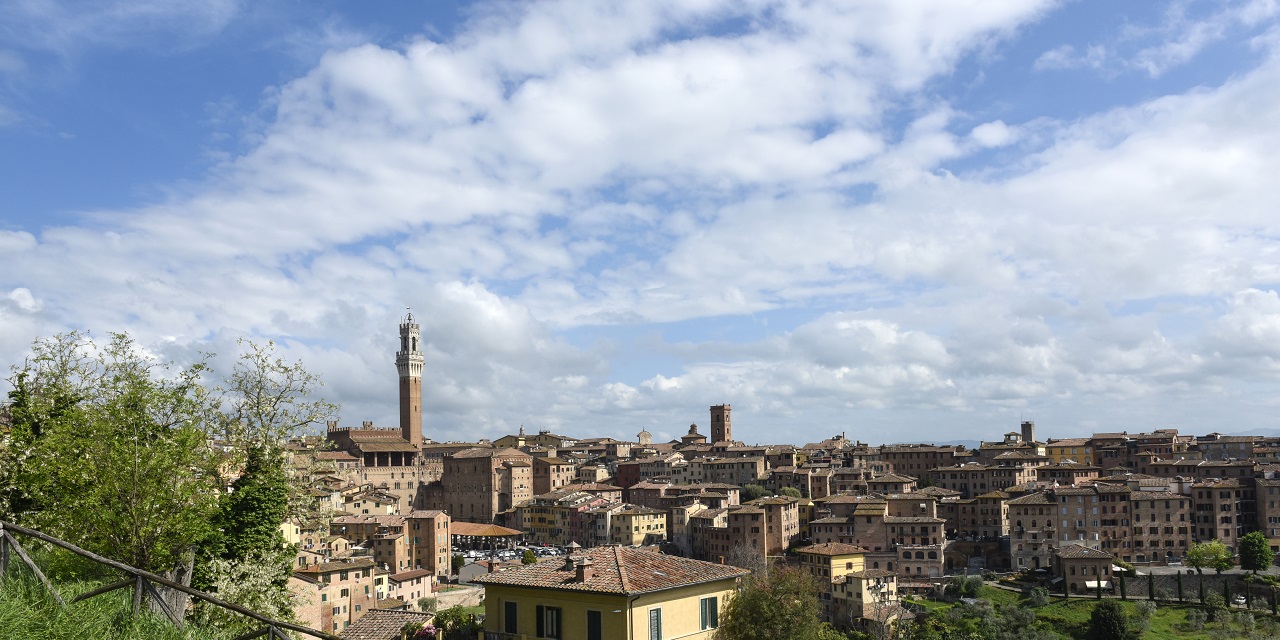
Here, it feels as if time has stopped at the 13th century, when the city’s artistic and architectural heritage started to develop, earning Siena its endless renown. It has been on the UNESCO World Heritage List since 1995, owing to its well-preserved mediaeval structure.
The main square, Piazza del Campo, is the mandatory starting point to describe the city. The square has a unique shell shape, and gently slopes towards the centre. This is where the famous Palio takes place: every year, in summer, the different Contrade (city quarters) challenge each other in a compelling horse race. All around are a number of monumental buildings, such as Palazzo Sansedoni and Palazzo Pubblico. Towering over the square is the majestic Torre del Mangia, built in the 1340s. Soaring an impressive 102 metres, it is just as tall as the Duomo belfry, to symbolize the balance between worldly and divine power. But there is more to Siena than just Piazza del Campo, including little streets and alleys teeming with little shops and craft stores where you can buy local handmade products or taste the famous cantucci cookies with a glass of Vin Santo. Throughout the narrow alleys, all the way to the wide Piazza del Campo, you can actually feel the real atmosphere of this city – contemporary yet ancient, monumental yet lively.