






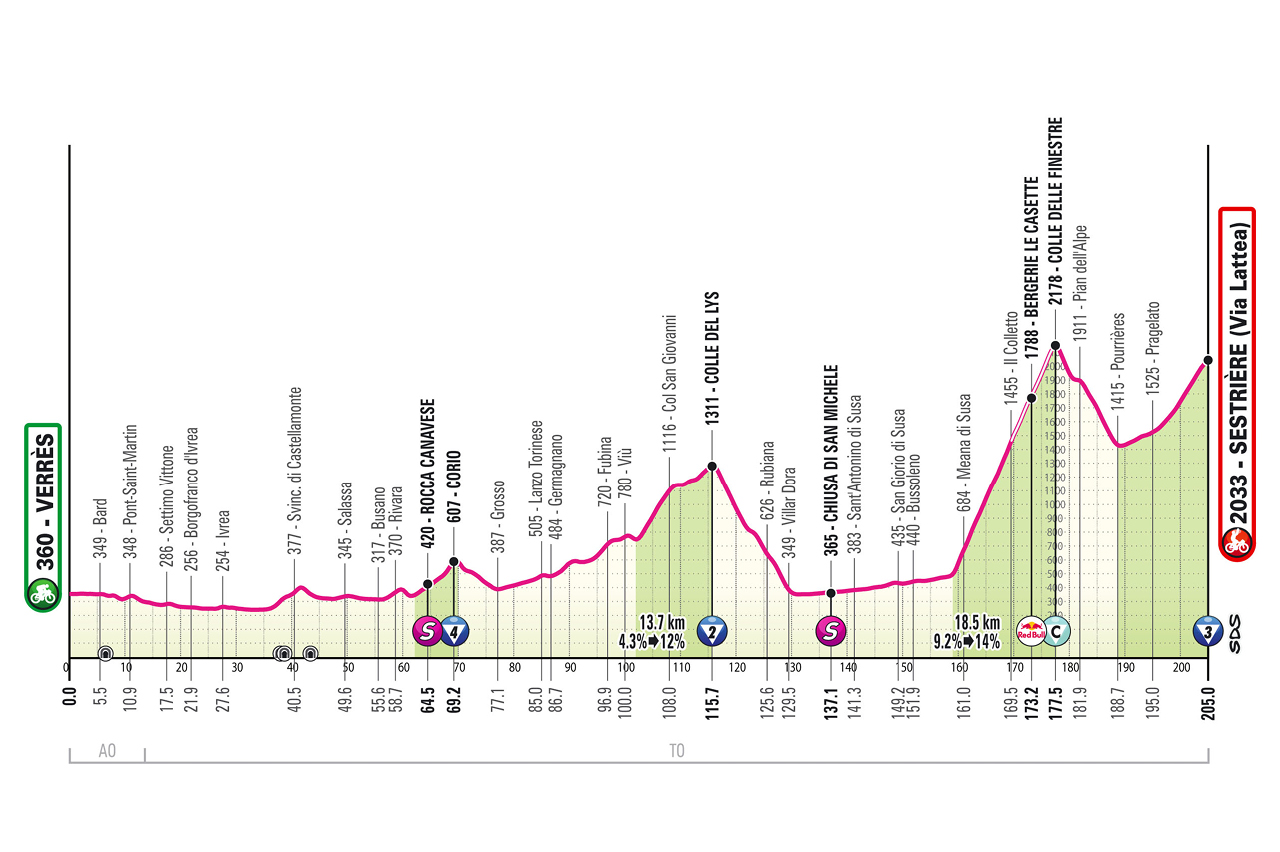
profile
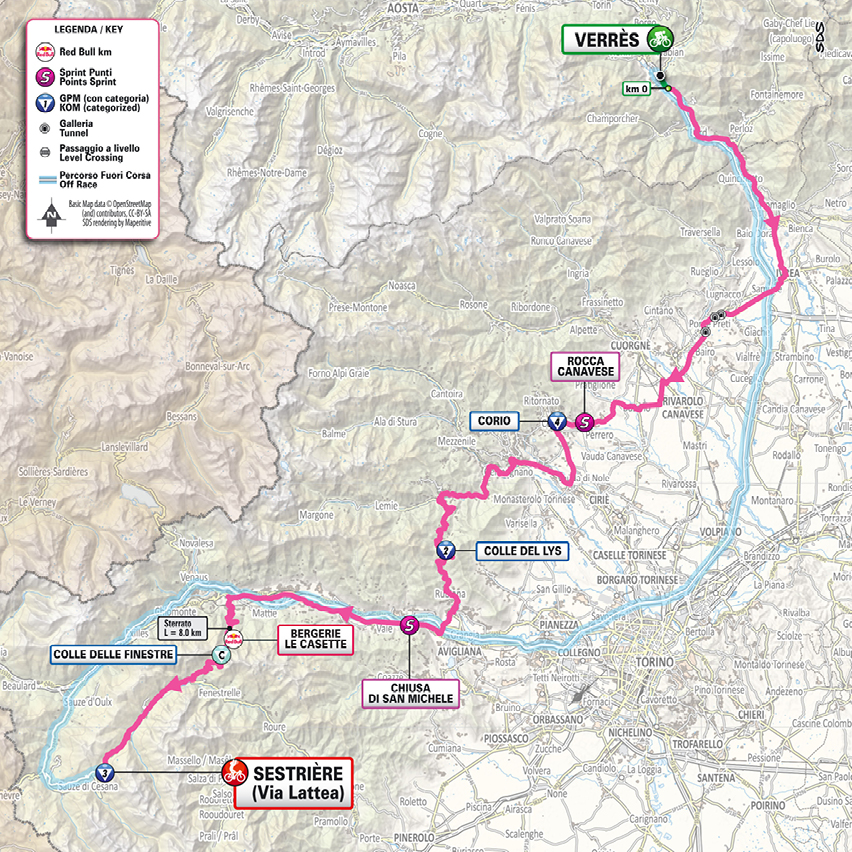
map
technical info
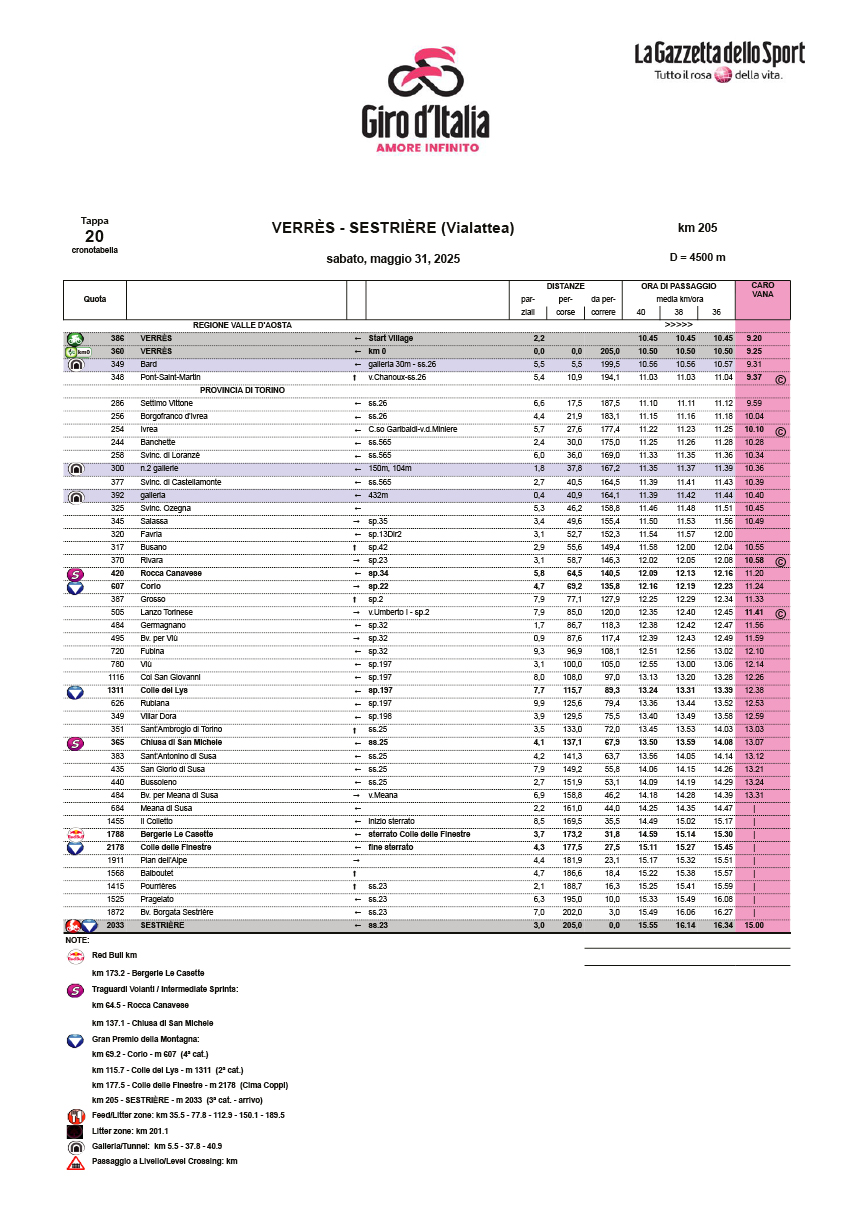
The stage starts flat until the Canavese region, then a series of increasingly tough climbs lead into the Valli di Lanzo. After Viù, the Colle del Lys climb begins. A descent brings riders into the Dora Riparia Valley to Susa, where the Colle delle Finestre (this year’s Cima Coppi) climb begins. The Finestre climb averages a consistent 9.2%, with a 14% ramp in Meana di Susa. The first 9 km are paved; the final 9 km are gravel. There are 29 switchbacks in less than 4 km (45 total). The descent to Pian dell’Alpe is narrow and exposed. The final climb to Sestriere on the SS23 is steady and manageable.
Final kilometres
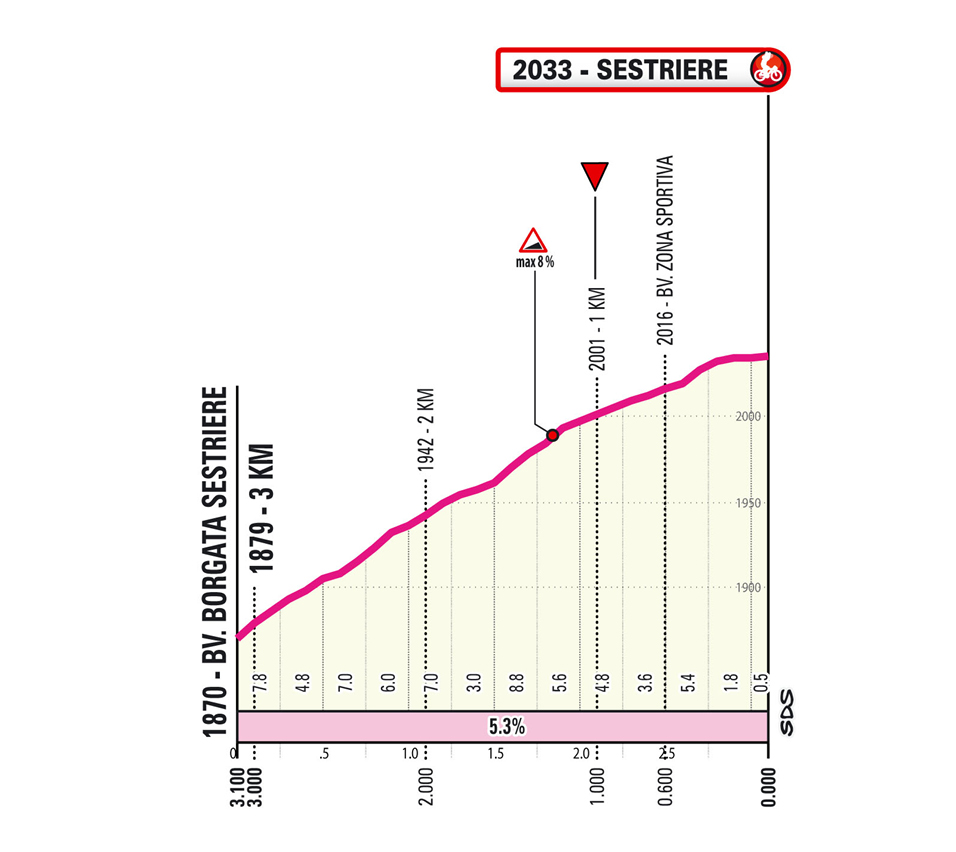
Final kilometres are all on the SS23, a steady climb at about 5% on a wide, well-paved road. Final straight: 400 m on 6.5-metre-wide asphalt.
start / finish

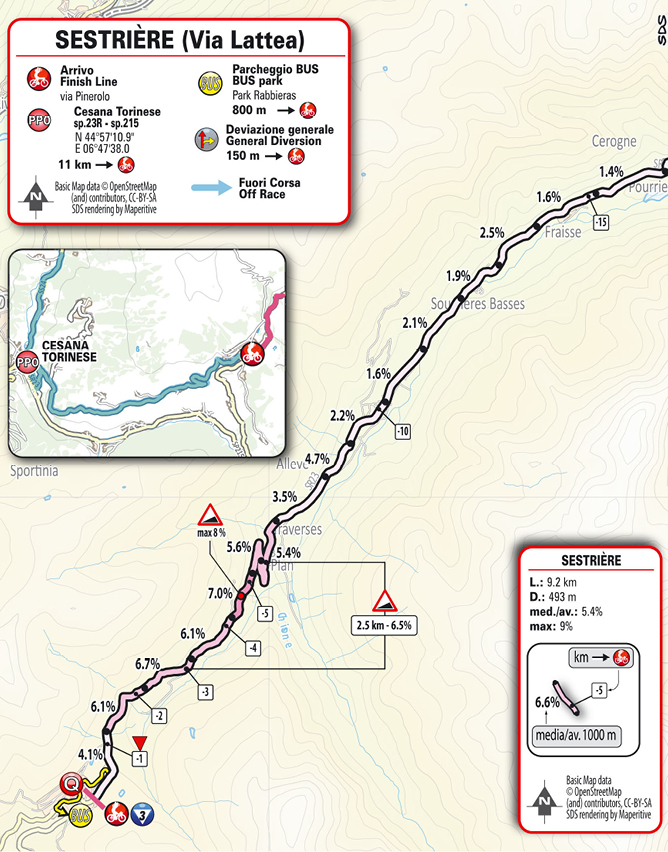
climb detail
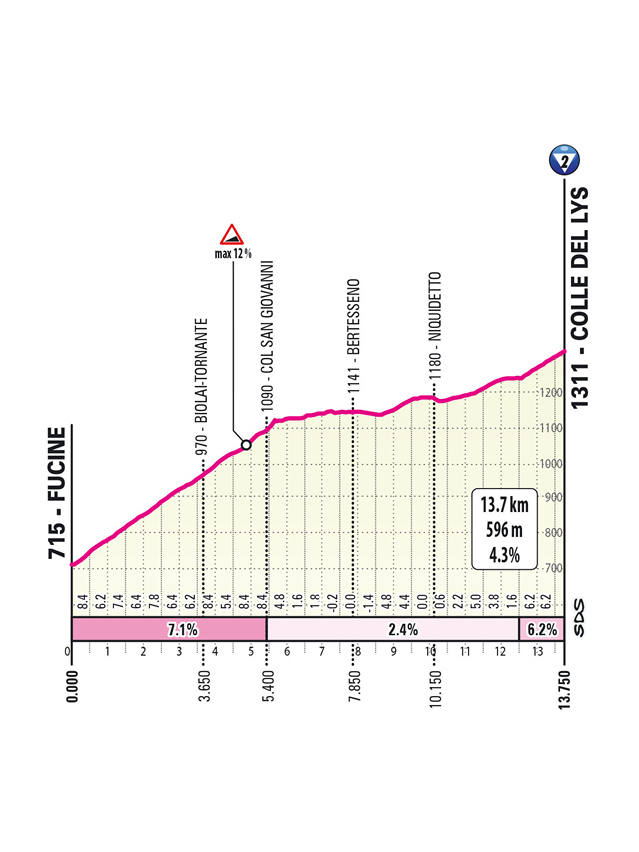
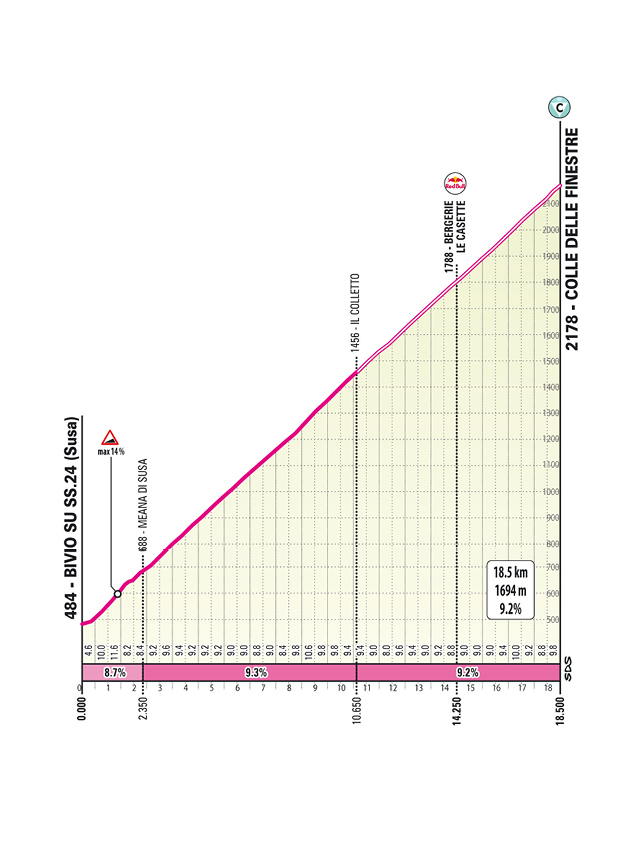
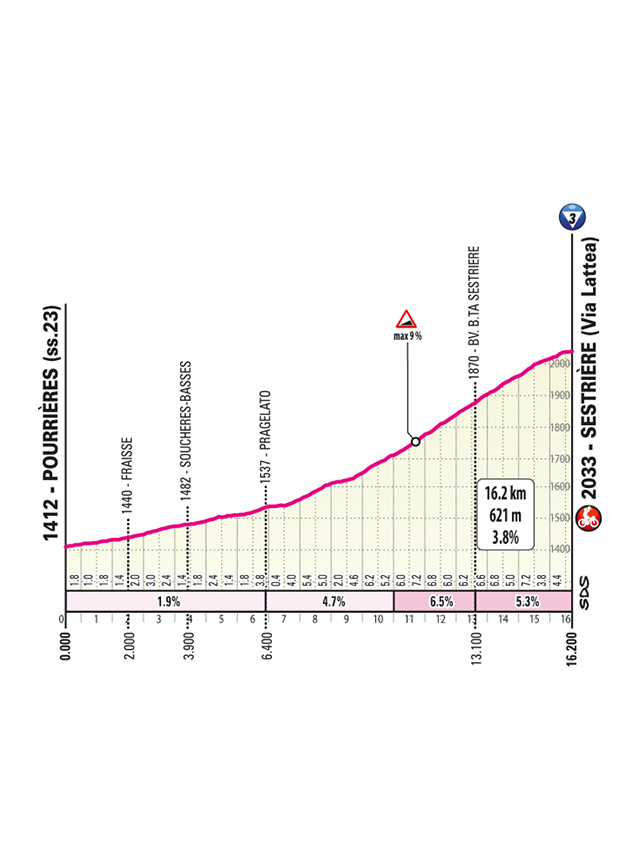
final kilometres
itinerary timetable
tourist info
Host city:
Verrès
Overview
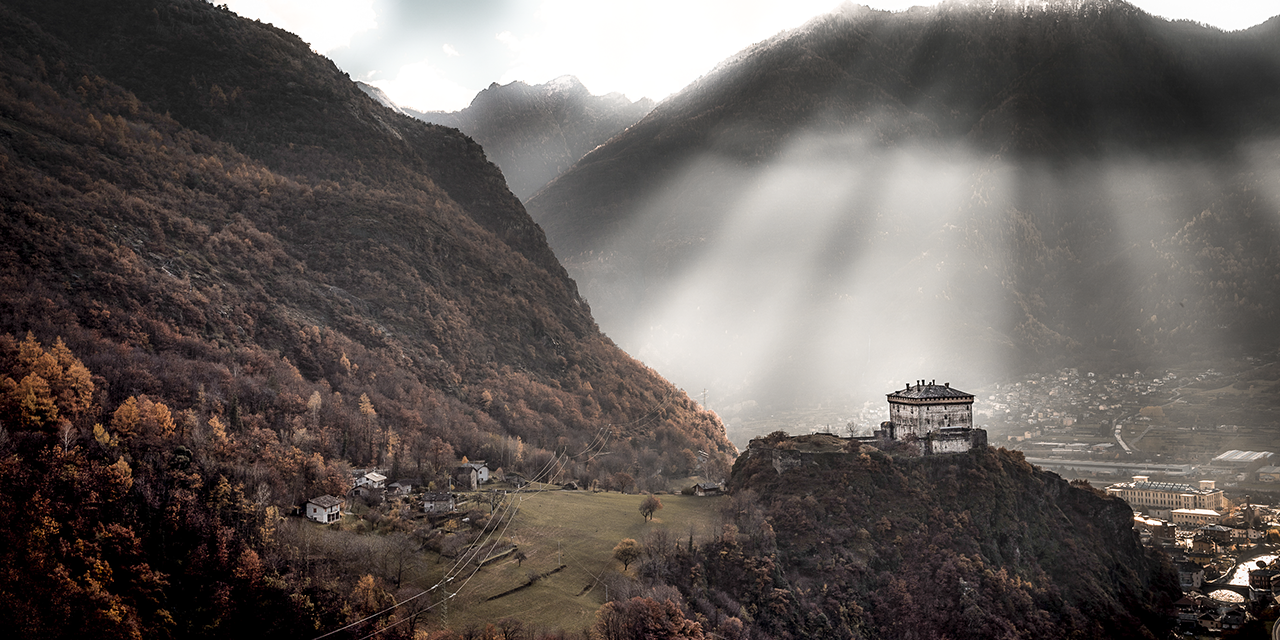
Verrès, in Valle d’Aosta, is a charming medieval village famous for its castle, which dominates the town. The village is an excellent departure point for exploring the region, offering scenic hikes and breathtaking landscapes. Verrès is also known for its gastronomic traditions, featuring typical dishes such as polenta and cheese. The historic center offers picturesque views and a peaceful atmosphere, far from mass tourism.

Gastronomy
Verrès boasts a cuisine rich in Alpine traditions, reflecting the simplicity and flavors of mountain life. One of the most distinctive dishes is Trocroque Boton, a savory biscuit made with Fontina, the famous cheese of Valle d’Aosta. This dish features melted cheese served with rendered lard, creating a bold and enveloping flavor combination, perfect for warming up during the cold winter days. Trocroque Boton is a dish that merges tradition with innovation, offering a unique culinary experience.
Polenta concia is another staple of Verrès’ cuisine. Made with polenta, butter, and abundant Fontina cheese, it is a dish that tells the story of the region’s mountainous heritage. The thick and flavorful polenta is enriched with melted cheese, creating a hearty and caloric meal, ideal for recovering after a day of agricultural labor or skiing.
The San Rocco Soup is another traditional dish known for its simplicity and taste. Named after the patron saint of Verrès, this soup is made with simple yet flavorful ingredients, such as stale bread, meat broth, cabbage, and potatoes. This recipe has been passed down for generations, offering comfort and tradition, perfect for warming up on cold winter evenings. Pumpkin-based dishes are a local specialty found in various forms throughout Verrès. Pumpkins, grown in the fields of Valle d’Aosta, are used in risottos, soups, and even desserts. The natural sweetness of pumpkin pairs beautifully with savory flavors, creating delicious and nutritious dishes. A classic example is risotto alla zucca, which blends the creaminess of rice with the delicate taste of pumpkin, making it an ideal dish for autumn and winter.


Wine and beverages
Among the most representative red wines, Rouge Tonen is a full-bodied and aromatic wine, perfect for pairing with the rich dishes of Valle d’Aosta’s tradition. Bocoueil, another typical red, stands out for its smooth and fruity taste, making it ideal for pairing with meats and cheeses.
Patri Meo Rosé is a fresh and fruity wine, characterized by its delicate color and light taste, suitable for summer dishes and as an aperitif. Müller-Thurgau, a fresh and aromatic white wine, is highly appreciated in the area for its ability to enhance light dishes such as appetizers and fish, thanks to its balanced acidity and fruity aroma.
Among the red wines, Pinot Noir and Merlot are also widely present. Pinot Noir is an elegant wine with a soft taste and good structure, while Merlot is known for its round and velvety flavor, perfect for pairing with meat dishes and aged cheeses. Rabec and Victore are other local varieties that reflect the region’s winemaking tradition, with Rabec offering fruity notes and Victore standing out for its bold and structured character.
As per the white wines, Petite Arvine is one of the region’s most representative varieties, with a fresh, mineral, and persistent taste, ideal for pairing with fish dishes or fresh cheeses. Chardonnay is also present, offering a version characterized by its freshness and ability to evolve over time, making it a perfect match for refined dishes and seafood.
Arnad Montjovet and Arnad Montjovet Superieur are prestigious red wines of the area, appreciated for their structure and rich aromatic bouquet, while Nebbiolo “Picotendro” is another wine of great character, known for its intensity and complexity, making it ideal for structured and hearty dishes.
Rosé Mariage is a light and aromatic wine, perfect for special occasions and pairing with fish or light dishes. Blanc du Mont and Rouge du Mont are other local labels representing Verrès’ winemaking tradition, with the former offering a fresh and mineral white wine and the latter a robust and enveloping red.
Seigneurs de Vallaise is a fine wine that blends tradition and innovation, while Traverse is a variety that perfectly embodies the identity of Valle d’Aosta, with a strong and well-structured character.
For spirits lovers, Grappa di Picotendro is a local specialty made from Nebbiolo grape pomace, featuring an intense aroma and bold taste. Kiu-Miel, a sweet honey-based liqueur, is another typical delicacy of the area, representing the perfect blend of honey’s sweetness and the art of distillation.
Points of interest
Verrès is a place rich in history and culture, with numerous points of interest that highlight the region’s heritage and traditions. One of the main attractions, the Collegiata di Saint-Gilles, is one of the most significant buildings in the area. This example of Gothic architecture, dating back to the 14th century, is characterized by its simple elegance and the beauty of its frescoes. The church is an important place of worship for the local community and houses numerous artistic treasures, including works by local artists from Valle d’Aosta.
The Castle of Verrès, the undisputed symbol of the town, is one of the most impressive fortifications in Valle d’Aosta. Situated on a hill overlooking the village, the castle was built in the 14th century and served as both a residence and a defense structure for noble families in the region. Today, the castle is open to the public and offers guided tours, allowing visitors to explore its richly decorated rooms, towers, and imposing walls. The panoramic view over the valley is breathtaking, making this monument an unmissable landmark.
La Murasse is another historical point of interest in Verrès. This fortified structure, extending along the river, represents an example of the medieval defense system of the town. La Murasse was built to protect Verrès from enemy incursions, and today, it still retains its ancient charm, visible in the remains of its walls and watchtowers. Walking along La Murasse, visitors can immerse themselves in the past and discover the region’s military history.
Another symbol of devotion in Verrès is the votive cross. Located in a panoramic spot in town, this cross was erected in gratitude to the Virgin Mary for protecting the community during times of calamity. The votive cross is also a pilgrimage site for many faithful and serves as a spiritual landmark for the local population.
La Brambilla, a historic industrial building, is now an example of how Verrès’ industrial past has been transformed into an important cultural center. La Brambilla was a cotton factory that played a crucial role in the region’s economy during the 19th century. Today, the structure has been restored and converted into a cultural venue, hosting events, exhibitions, and artistic activities. This successful revitalization demonstrates how Verrès has managed to preserve its industrial heritage while creating a hub for contemporary culture.


Sestriere
Overview
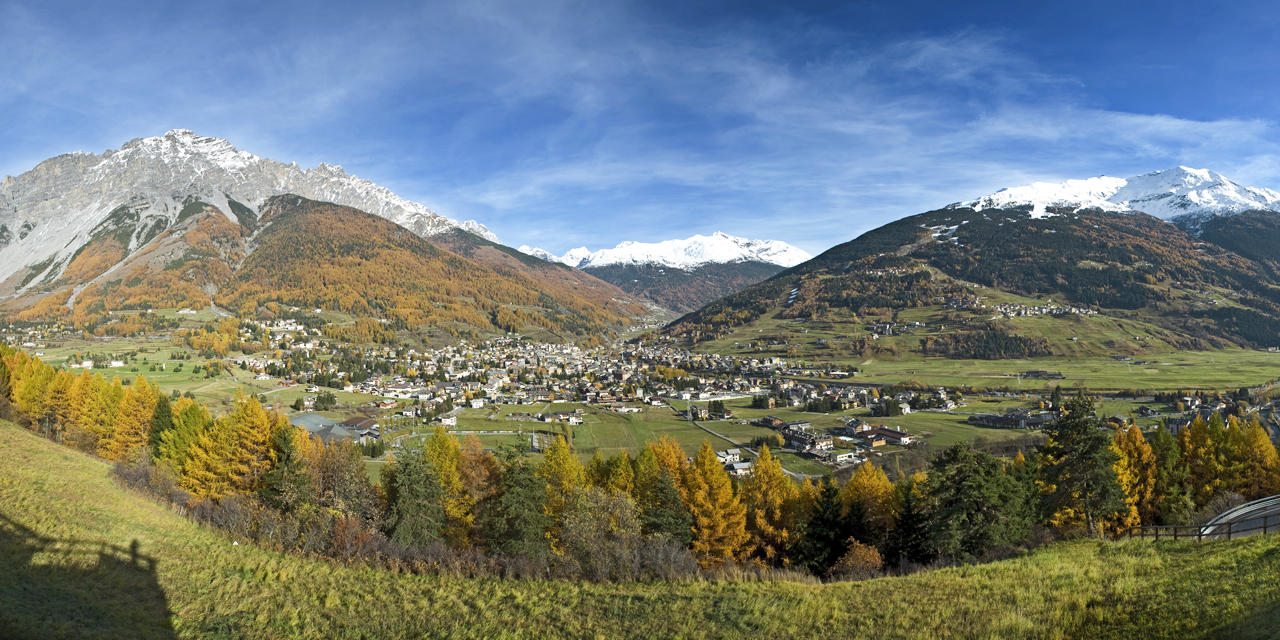
Summit of the Piedmont Olympic mountains and the Vialattea ski area, from the height of 2,035 meters, the Municipality of Sestriere is located on the homonymous hill straddling the Val Chisone and the Valle di Susa. It is dominated to the northwest by Mount Fraiteve (2,701 m), to the southeast by Mount Sises (2,658 m), Punta Rognosa di Sestriere (3,280 m) and Mount Motta (2,850 m). Sestriere is a renowned and safe point of reference for national and international tourism also thanks to the image it has been able to conquer over the years by successfully hosting major sporting events. From the Ski World Cup, to the 1997 World Ski Championships, to the Turin 2006 Winter Olympics and Paralympics: Sestriere is the ski resort that has hosted the largest number of internationally titled races.
It is also in the legend of great cycling as an alpine location that hosted the arrival of legendary stages of the Giro d’Italia.


Food
Simple or refined, strong or delicate, the flavors of our mountains are an integral part of a stay. In fact, the local gastronomic tradition is perfectly combined with selected cards of the best wines of Italy. From the most popular to the most renowned labels to accompany delicious dishes.
Points of interest
The origins of Sestriere are very recent: the town was built by royal decree on 18 October 1934. During the 1930s the first tourist settlements were built including the two characteristic towers that symbolize the hill. Sestriere consists of four residential units: Sestriere Colle, Sestriere Borgata, Champlas du Col and Champlas Janvier.