







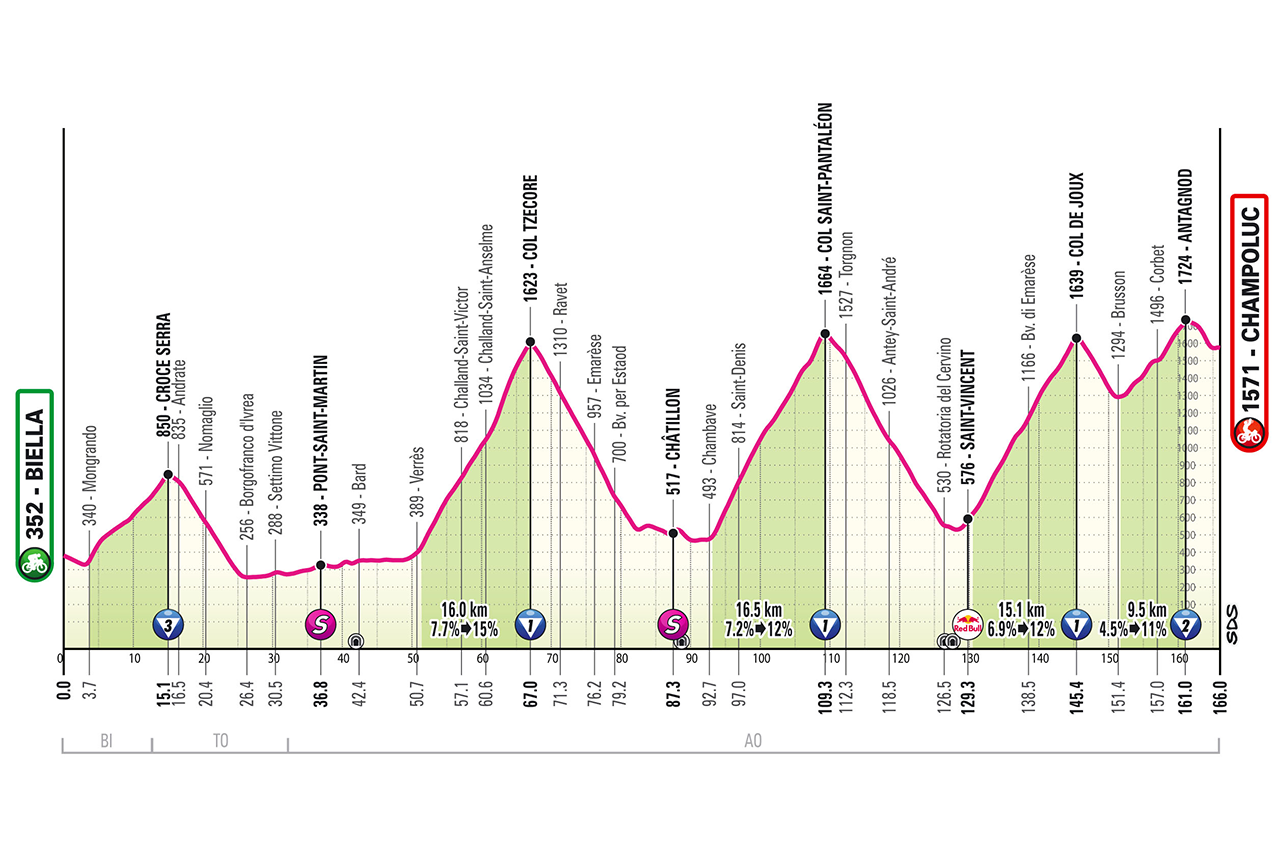
profile
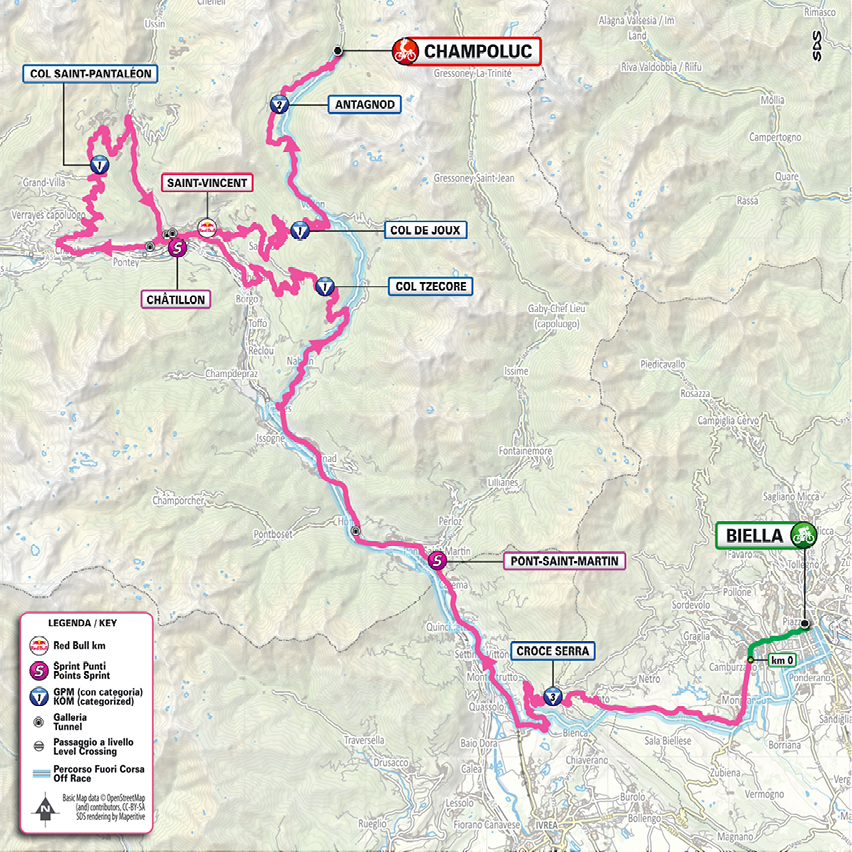
map
technical info
An Alpine tappone made up entirely of climbs and descents. After just 4 km comes the first ascent to Croce Serra, which leads into the Dora Baltea Valley. A short false flat brings the riders to Verrès, and then it’s three long climbs of about 15 km each, without breaks in between: Col Tzecore (last 4 km over 12%), Col de Saint-Pantaléon, and Col de Joux. After descending to Brusson, the final part begins, always uphill, with the steep pass through Antagnod (up to 11%) ending 5 km from the line.
Final kilometres
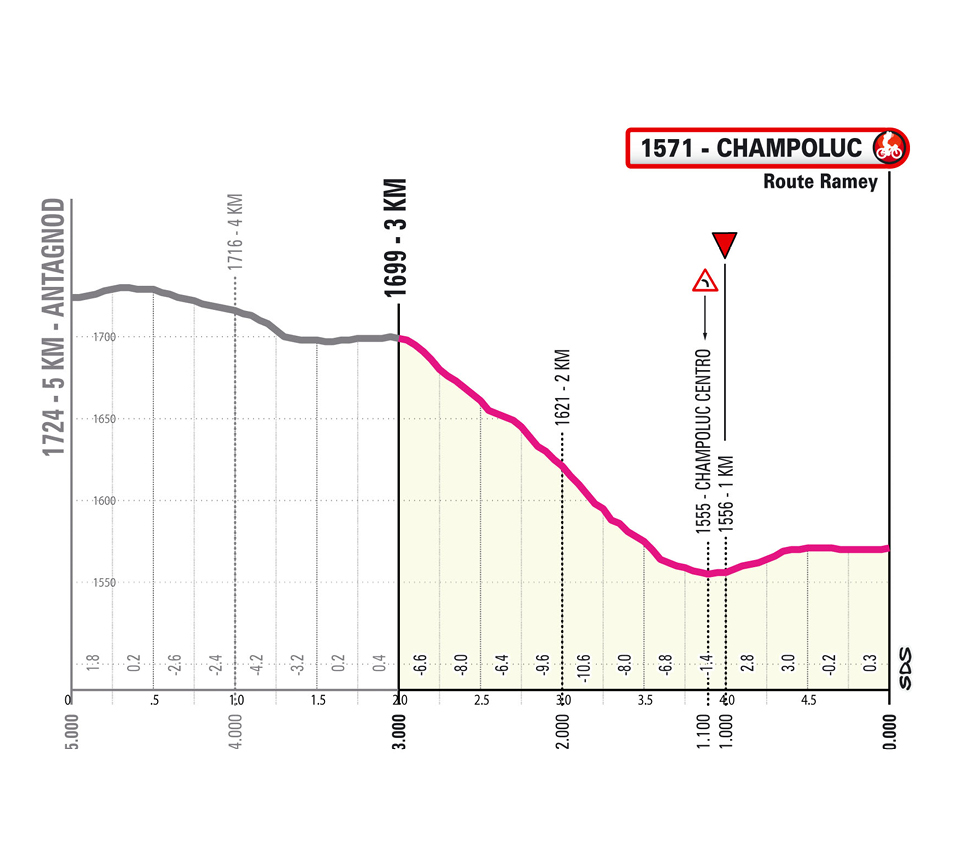
At about 5 km to go, a descent begins—initially gentle, then steeper from 3 km out, with a series of switchbacks leading into the final kilometre through Champoluc. The last 1 km includes cobbles up to 400 m from the line, then a steady rise to the finish. Final straight: 80 m on 7-metre-wide asphalt.
start / finish

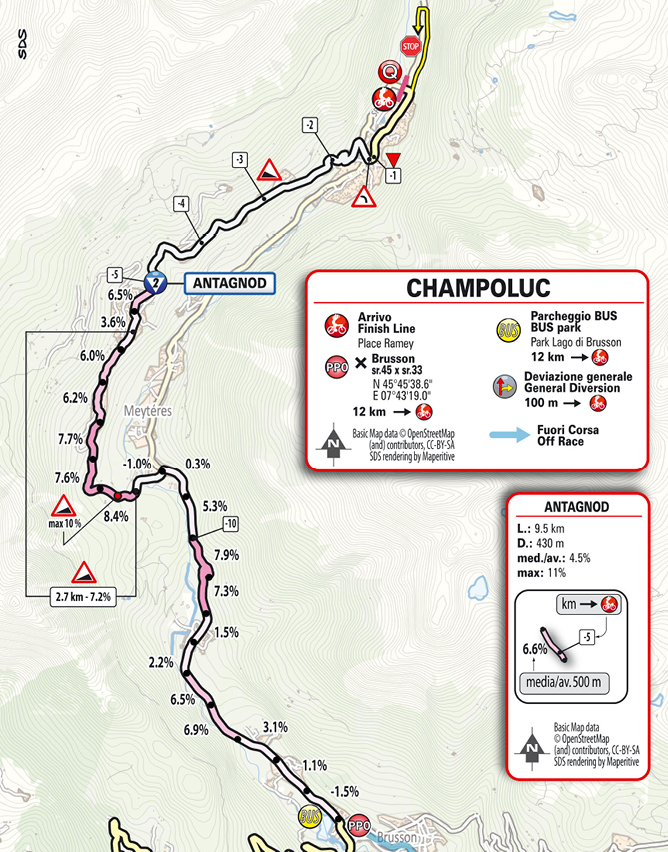
climb detail
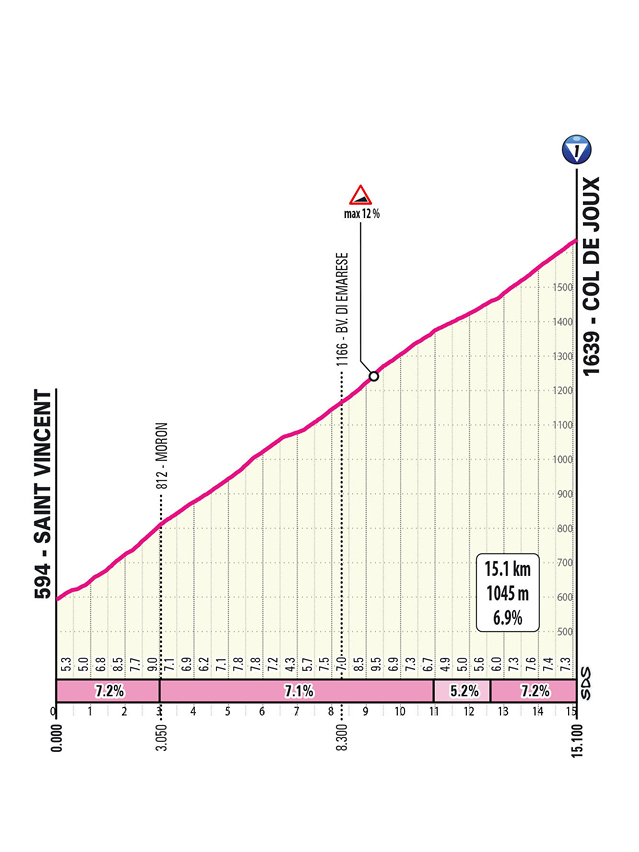
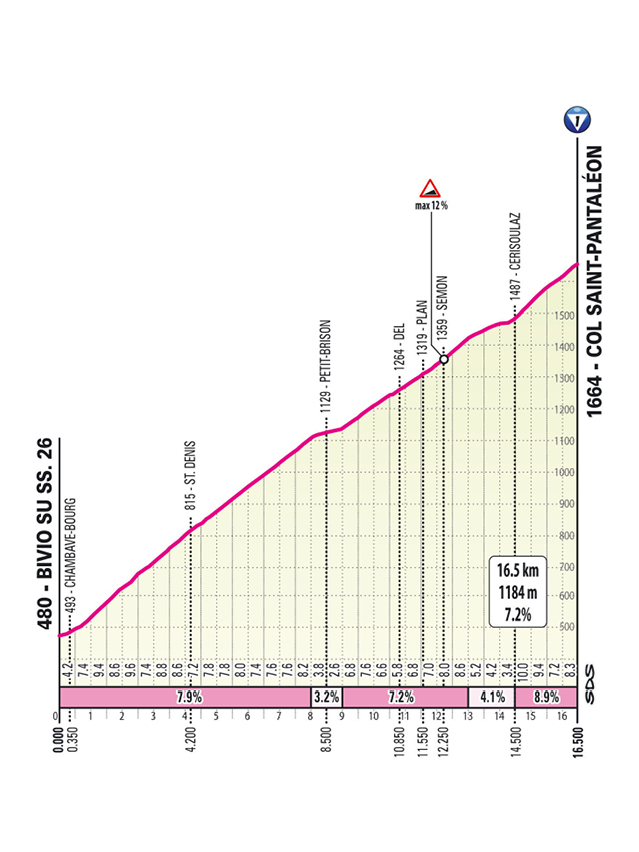
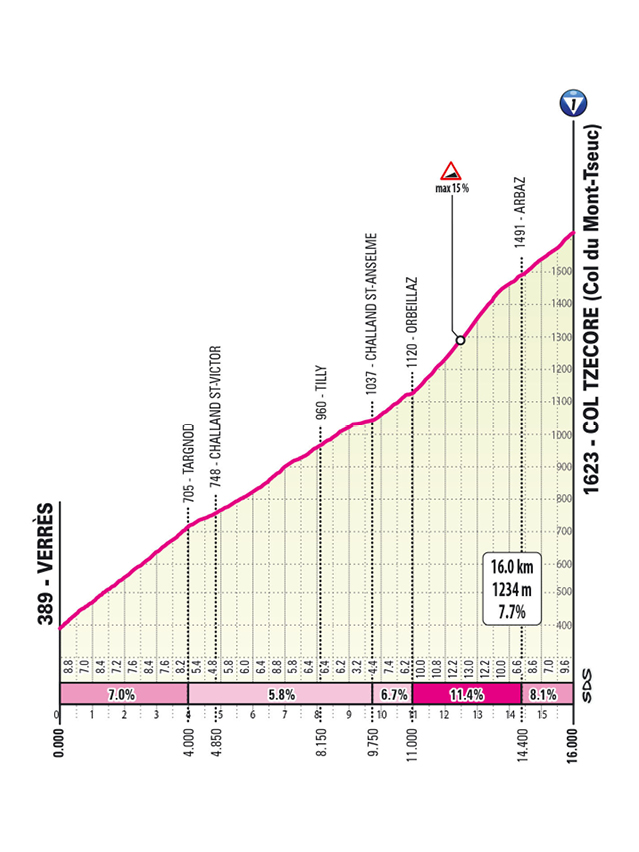
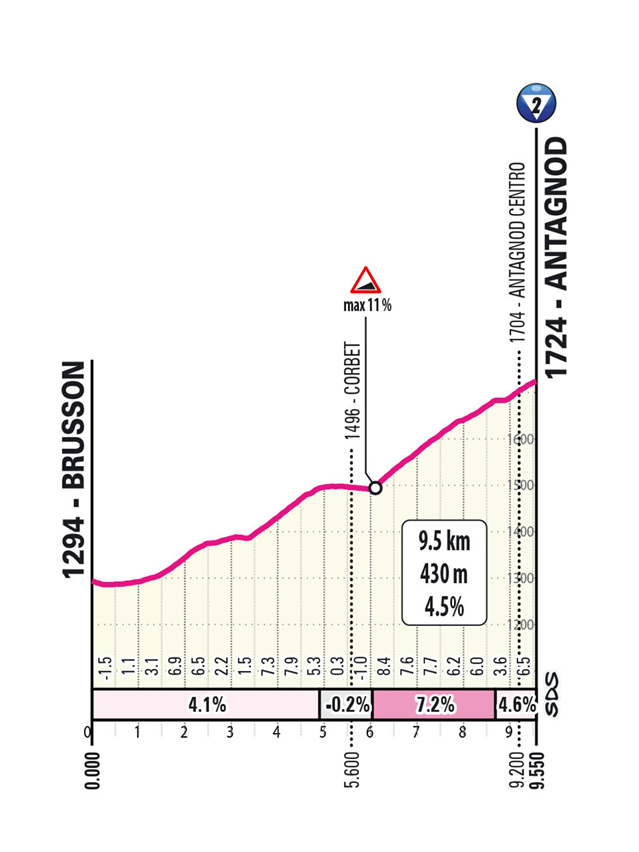
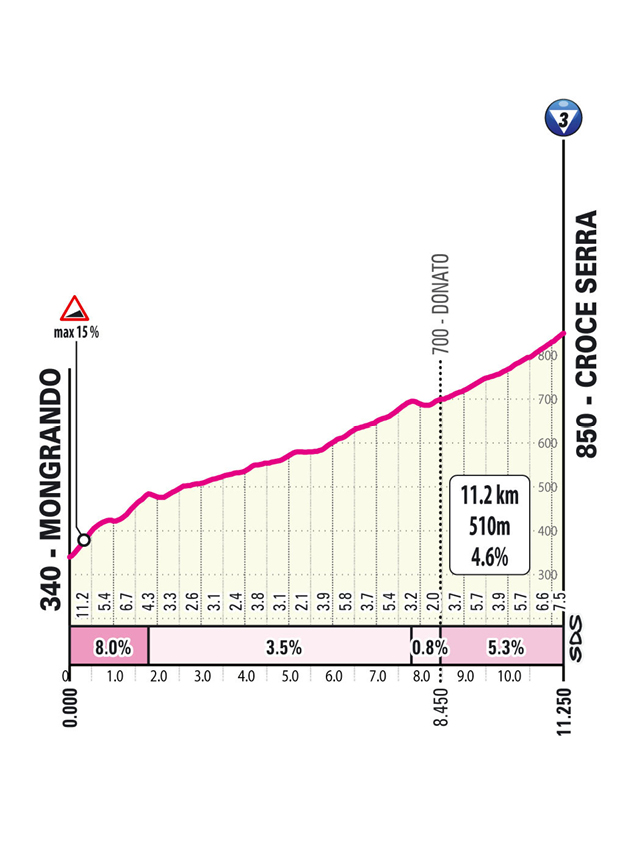
final kilometres
itinerary timetable

tourist info
Host city:
Biella
Overview
Biella is one of the chief towns of Piedmont and it is situated at the foothills of Biella Alps.
Biella existence is attested since the Early Middle Age, dominated first the bishops of Vercelli and then by the Savoy, during the nineteenth century Biella experienced a great urban and industrial development becoming known for the textile industries.
It develops on several levels reflecting its history: the Piazzo, located on a hill (480m asl) reachable with a panoramic funicular railway, it is the oldest part of the city and retains the characteristics of a medieval village with access gates and cobbled streets that pass through stately buildings.
The newest Biella’s area is dates back to the Roman age and there are important sights from different eras such as the Baptistery and the bell tower, both Romanesque and the Renaissance Church of San Sebastiano, those architectural elements are inserted in an elegant context resulting from the nineteenth-century urban development. Along the Cervo river the monuments of industrial archeology stand out, some of them have now been transformed into cultural centers.


Gastronomy
The local cuisine has a clear Piedmontese imprint, supported by companies nationally and internationally known and by the many small producers who keep the tradition of the territory alive.
Biella’s food and wine is fully counted among the excellences of Piedmont.
Among the best known cheeses we can find the Toma, hard paste, made with cow’s milk, following the ancient Alpine tradition. It is also produced with full-fat milk and it became Maccagno type and with half skimmed milk. The tomes of the Biella valleys have the recognition of the D.O.C. by the Piedmont Region.
These cheeses are also the main ingredients for two great typical dishes: the ‘pulenta cunscia’, a soft cream made with corn, that has to be cooked for a long time in a cauldron, the recipe is a mix of local cheese melted with tasty farm butter and the ‘ris an cagnun’, that is a risotto made with toma and fried butter.
Among the most well known sausages we have: ‘salam d’ula’, that is preserved in fat and made with meet, salt, pepper and sometimes red wine. Others local dishes are “salam d’asu” with donkey meat and those based on goat meat. The production of “salam ‘d patata” is more localized, then the “Paletta of Coggiola”, a shoulder ham flavored with salt and pepper, stuffed into the bladder and dried in the air.
The Biella desserts: the torcetti which are leavened, crumbly biscuits in an oval donut shape. The “paste ‘d melia” biscuits made with corn flour. Canestrelli, fragrant wafer pods with chocolate and hazelnuts.
The great variety of blooms allows to select a wide variety of types of honey: acacia, chestnut, linden, rhododendron, dandelion and wildflower, just to name the most common.
Drinks
The waters of Biella area are famous for their exceptional lightness: one of them is Lauretana with its 14 mg / l of fixed residue which determine its lightness as a European record. Biella also boasts a high quality beer: Menabrea is the oldest active brewery in Italy, and over time it has won several international awards, it has also been judged the best lager beer in the world. Many industry awards also for the numerous micro breweries located in the area that offer a wide selection of craft beers, particular in tastes and with carefully selected and blended ingredients.
Among the wines of the territory, a D.O.C.G .: the Erbaluce di Caluso straw yellow wine, with a fine scent reminiscent of wild flowers and a dry, fresh and characteristic flavor. Red wine is also represented with 4 D.O.C .: Bramaterra, Lessona, Canavese and Coste della Sesia, ruby red wines, with a characteristic and intense aroma, and a dry and harmonious flavor. A special mention goes to the Ratafià di Andorno, a liquor obtained from the alcoholic maceration of wild cherries, according to a 500-year-old recipe.
Main sights
The territory is characterized by a great environmental variety, natural and history.
In the historical town centre is located the Museum of the territory of Biella, this is the museum that collects evidence from the whole area, from Viverone till La Vecchia lake , from Bessa till the Rubello mountain top. The visit to the museum, situated in the cloister inside the St. Sebastiano Basilica, allows everyone to travel in time since prehistoric age to the nineteenth-century. A realistic 3D map of Biella will welcome you at the main entrance hall and the shape of it will give the feeling of being embraced in the map, then the museum suggest two different paths, the first one trough the archeological department (exhibits from paleontology to the Middle Ages) and the other one is dedicated to historic/artistic artifacts (from Renaissance to nineteenth-century collecting).
No tourists can miss the visit to the St. Stefano Cathedral, patron of Biella, built in the oldest core of the town center host a rare example of medieval christian iconographic, disappeared nowdays after the Concilio di Trento : The Sunday Christ. Next to the Cathedral stands another significant example of Romanesque art : The Baptistery, built on a roman burial site.
The city of Biella and the municipality of Pollone host the Burcina natural park, which extends on the slopes of a hill at 826 meters above sea level. Created in the mid-1800s by the textile entrepreneur Felice Piacenza, it covers 57 hectares, preserving numerous specimens of rhododendrons, azaleas and precious conifers and exotic broad-leaved trees perfectly integrated with the existing vegetation. In 1980 it became a Special Nature Reserve.
At few kilometers from the town at 1180 meters above sea level, we can find the Black Madonna Sanctuary, the most famous pilgrimage site in Piedmont, one of the most known in Italy and perhaps the most ancient Marian Sanctuary in the west. The building is considered UNESCO world heritage and the entire area became “Sacro Monte di Oropa Special Nature Reserve”.
A reference point for tourism in Biella’s mountains is Oropa : reachable in a short time from Vercelli, Novara, Milan, Turin and many other cities in the north-west. The cable car, located behind the Oropa Sanctuary, in less than 10 minutes will take you to 1900 meters above sea level, close to Lake Mucrone. In the summer time there is the possibility to go climbing, trekking, downhill or simply enjoy the spectacular landscape of the Po Valley and spend the night over in one of the refuges. During the winter the Camino mountain freeride slopes are the main protagonists, they extend from 2400 to 1200 meters above sea level, there is also the possibility to go hiking with snow shoes and ski mountaineering.
Another natural park near the city is the “Oasi Zegna” protected area in Trivero, 100 square kilometers of naturalistic area with free access in the Biella Alps.


Champoluc
Overviewza
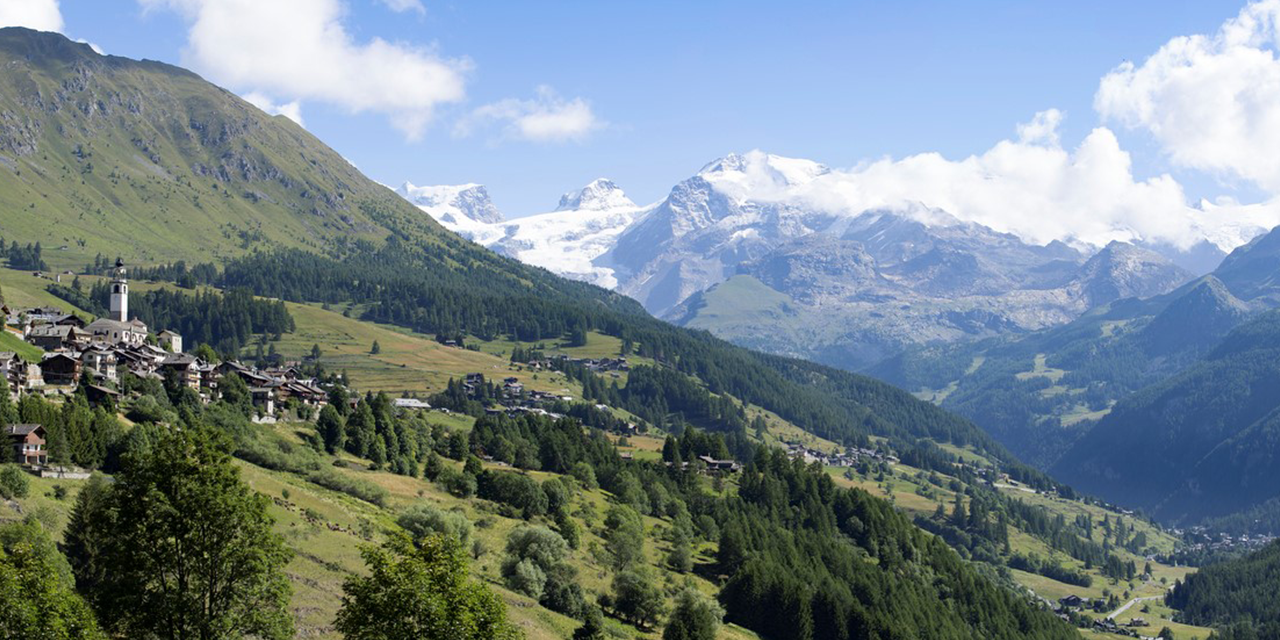
Champoluc, in the region of Valle d’Aosta, is one of the main ski resorts in the Alps. Located in the heart of Monte Rosa, it offers spectacular views and a wide range of ski facilities. Champoluc is also an ideal departure point for summer hikes and mountain walks. The village, which retains a typical Alpine atmosphere, is a perfect place for those seeking outdoor adventures or simply relaxation in nature.

Gastronomy
Champoluc, in the heart of the Ayas Valley, offers a typical cuisine that reflects the mountain traditions of Valle d’Aosta. Among the most representative dishes is the Valle d’Aosta fondue, a rich and creamy dish made with local cheeses such as Fontina, melted with milk, butter, and eggs, accompanied by toasted bread. Polenta concia, another traditional dish, is made with polenta served with melted butter and abundant cheese, perfect for warming up during cold winter days.
Meat-based dishes are a staple of Champoluc’s cuisine: among the most renowned are venison and chamois, often braised or served with herb-based sauces. Risotto alla valdostana, prepared with cheese and mushrooms, is another dish that encapsulates the flavors of the mountains.
Desserts include typical cakes such as the Valle d’Aosta apple cake or hazelnut cake, offering an authentic taste, perfect for ending a mountain meal. Honey and artisanal jam, both typical of the region, are often paired with cheese or simply enjoyed on their own. The cuisine of Champoluc is a true journey into traditional flavors, ideal for those wanting to immerse themselves in the authentic tastes of the Alps.


Wine and beverages
The typical drinks reflect the Valle d’Aosta tradition, offering a mix of aromas and flavors that perfectly complement the Alpine climate and mountain culture. One of the most representative beverages is Genepy, an aromatic and digestive liqueur made from Alpine herbs that grow at high altitudes. Its unique, slightly bitter taste makes it perfect after a hearty meal.
Another traditional beverage is Valle d’Aosta grappa, produced from local grapes or pomace, known for its strong flavor and ability to warm up cold winter evenings. Grappa is often served as a digestif, paired with cheeses or traditional desserts.
For those who prefer a sweeter drink, there is Valle d’Aosta honey, frequently used as a natural sweetener or mixed with hot water to create a warm, soothing drink, ideal for facing the harsh mountain temperatures.
Finally, Valle d’Aosta craft beer is gaining increasing popularity, thanks to local breweries that use regional ingredients such as hops and Alpine herbs. These fresh and flavorful beers are perfect to accompany a meal or simply for a moment of relaxation after a day of hiking
Points of Interest
The village is an ideal departure point for exploring the numerous attractions that enrich the area, offering unforgettable experiences for those passionate about history, nature, and mountain traditions.
One of the most historically significant sites is the Church of San Martino in Antagnod, a 15th-century church located in the homonymous hamlet. The church is a fine example of Alpine architecture, with a simple yet charming structure that harmonizes perfectly with the surrounding landscape. Inside, visitors can admire beautiful frescoes that narrate religious life and local traditions. The church is also an important reference point for the Champoluc community and a place of worship where religious devotion is celebrated.
The Ru Cortot da Barmasc is a historic trail that winds through the mountain landscape, following an ancient mule track that once connected the hamlets of Champoluc to the valley below. The route is particularly scenic, offering a breathtaking view of the village and the surrounding valley. Along the way, hikers can discover hidden corners and picturesque views that make the Ru Cortot an ideal destination for trekking and learning about local history.
The Monte Rosa Massif, one of the highest peaks in the Alps, is undoubtedly the highlight of Champoluc. The mountain is an unmissable destination for mountaineers and skiers, as well as for those who simply love to admire the breathtaking panorama it offers. Monte Rosa is a symbol of the majesty of the Alpine landscape, and its imposing presence dominates the Champoluc scenery, providing incredible opportunities for hiking, climbing, and ski touring.
Another enchanting destination is Lago Blu, located at 2,000 meters above sea level, accessible via an easy hike. This Alpine lake, surrounded by forests and snow-capped peaks, is a perfect spot for a peaceful walk, photography, or simply to enjoy the serenity of the landscape.
The Village of Mascognaz, one of the most charming corners of Champoluc, is an ancient hamlet that has preserved its traditional appearance. This picturesque mountain village, characterized by stone and wooden buildings, is perfect for those wanting to immerse themselves in history and local traditions. Mascognaz is also renowned for its panoramic location, offering an unparalleled view of the surrounding mountains. The village is the ideal place for a stroll to discover the ancient Walser houses and the traditions of the past.
Finally, Sabots are the traditional wooden clogs that have been used for centuries by the inhabitants of the Valle d’Aosta. A symbol of mountain traditions, sabots were once essential for working in the fields and facing harsh winter conditions. Today, these clogs have become a cultural heritage symbol and are often purchased as souvenirs, allowing visitors to take home a piece of Valle d’Aosta tradition.