






profile
map
technical info
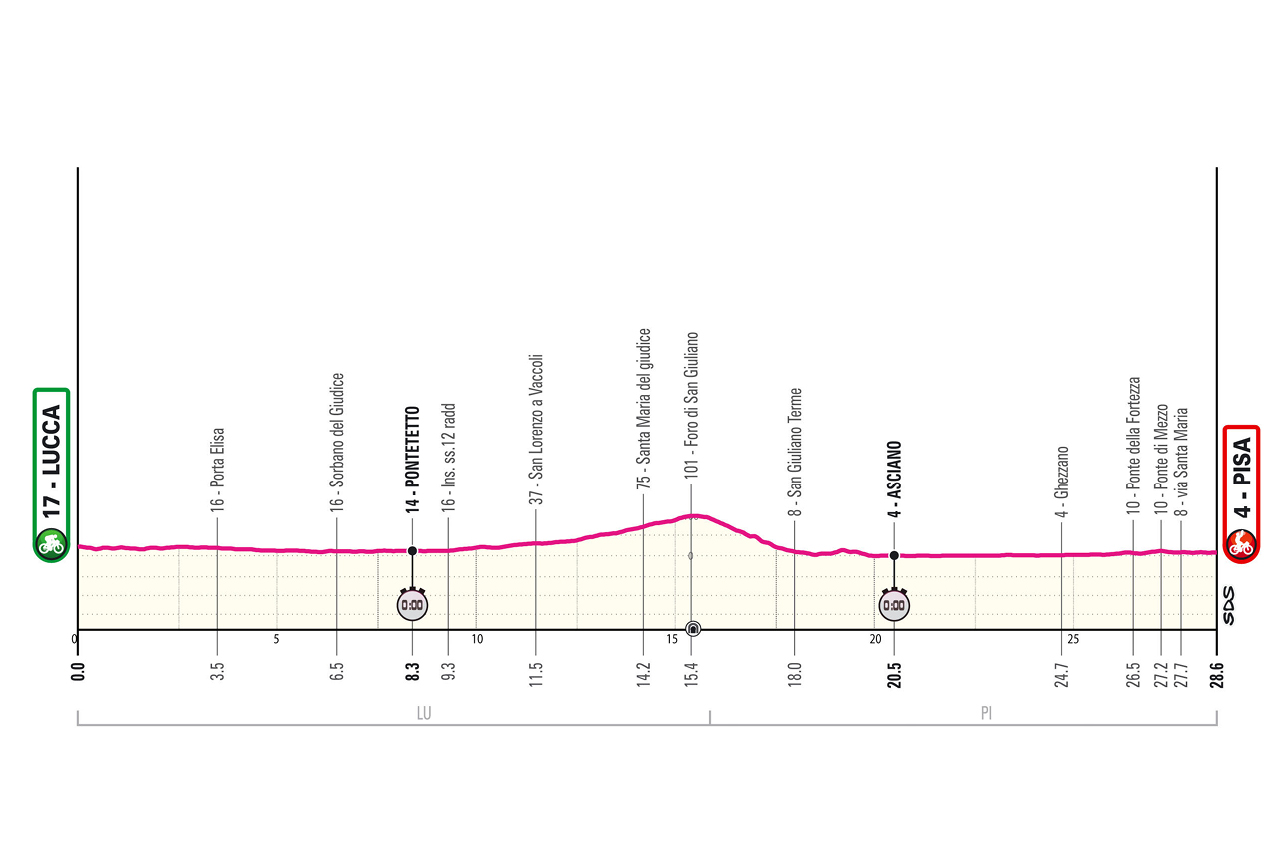
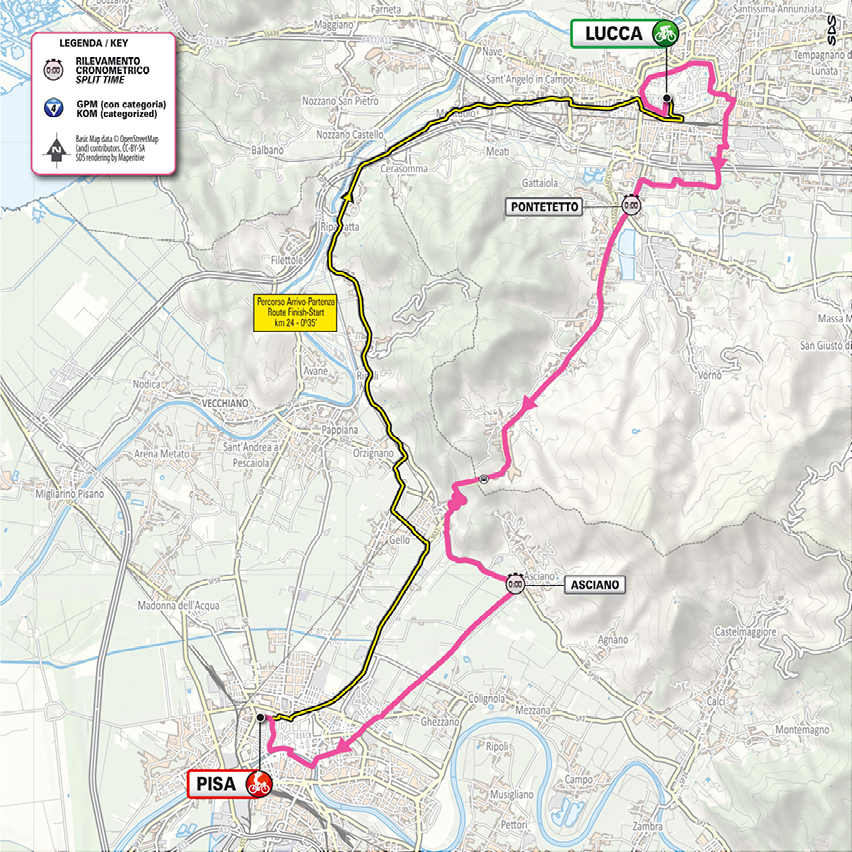
A mostly flat individual TT with one short climb mid-route. Starting in Lucca, riders circle nearly all of the city walls, then head through the southern part of town with a series of turns. After the first time check, the course becomes straight with a slight uphill drag toward the Monti Pisani tunnel (950 m). After the tunnel, fast sweeping bends take the riders to San Giuliano Terme and Asciano, then into Pisa about 3 km from the line. The finish is right beside the Leaning Tower.
Final kilometres
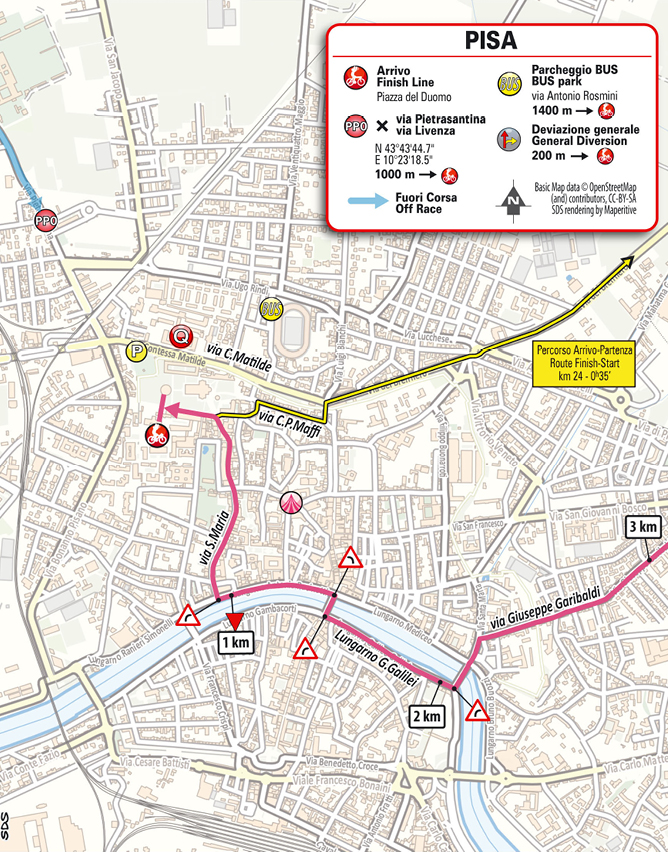
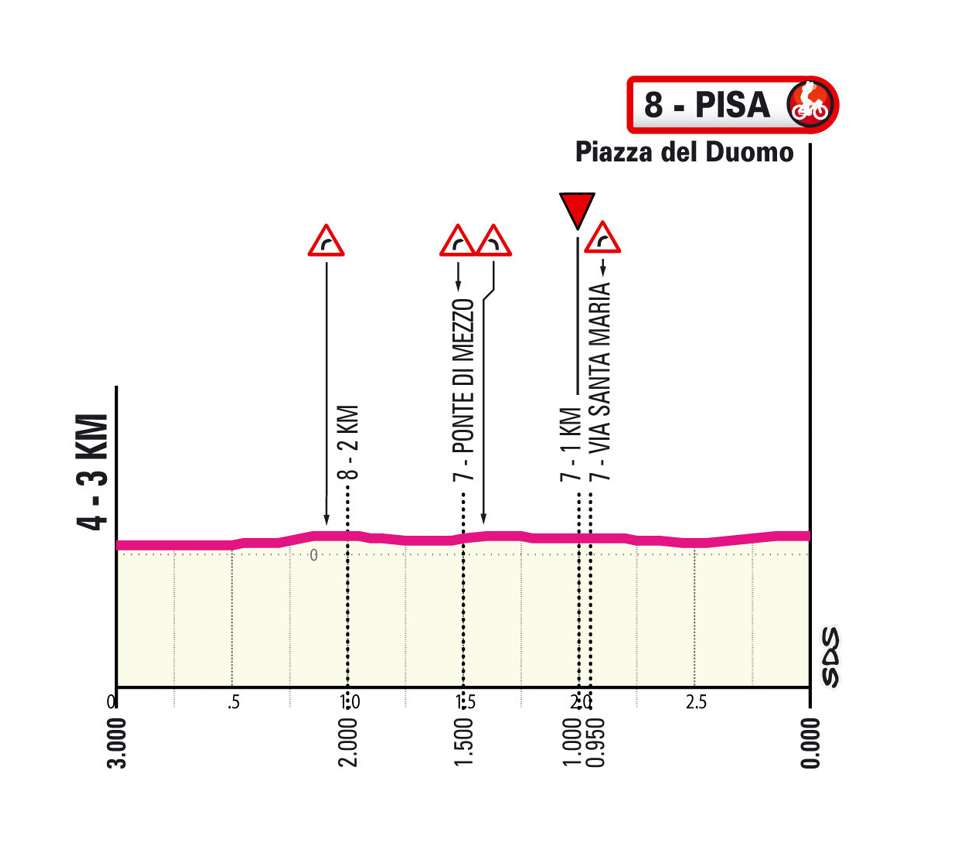
Several curves and river crossings. Just after 1 km to go, the route leaves the riverfront for the city centre. At 500 m, riders hit cobblestones that continue until the last corner. The final straight is 200 m on 6-metre-wide asphalt.
start / finish

final kilometres
itinerary timetable

tourist info
Host city:
Lucca
Overview
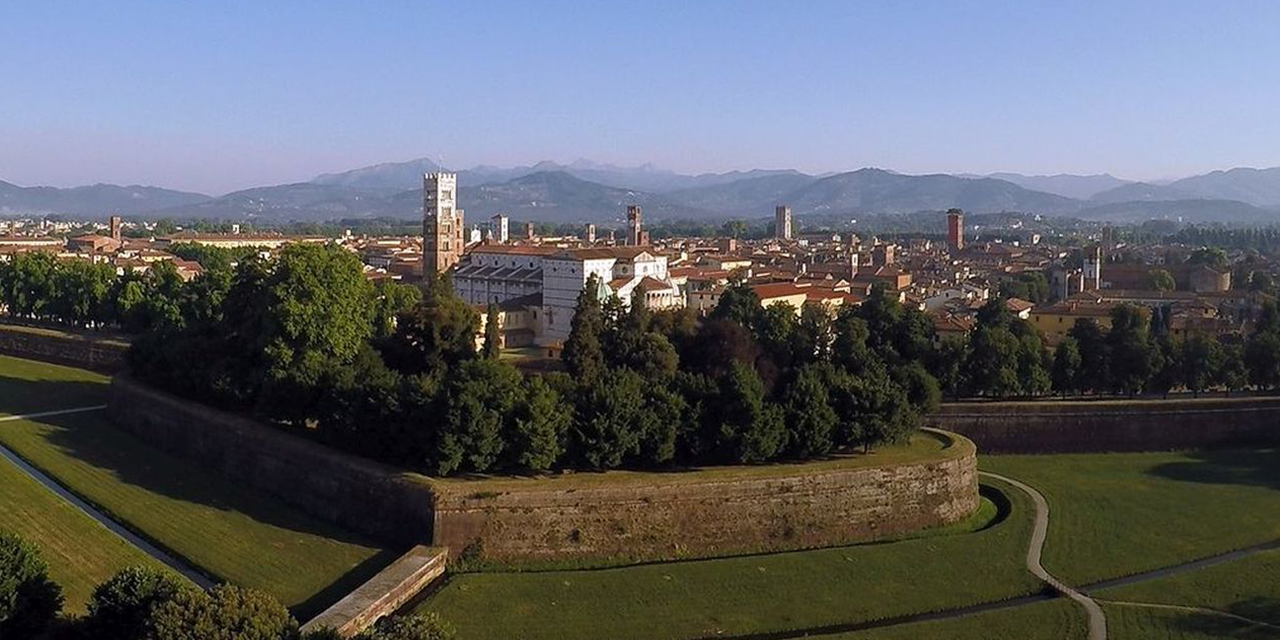
Provincial capital of Tuscany, Lucca is a city steeped in ancient history, but also a lively cultural centre full of important events. Famous for its perfectly preserved 16th century city walls, it is characterised by its numerous precious monuments dating back to a past when Lucca was one of the most important cities of the Italian Middle Ages.


Local Cusine
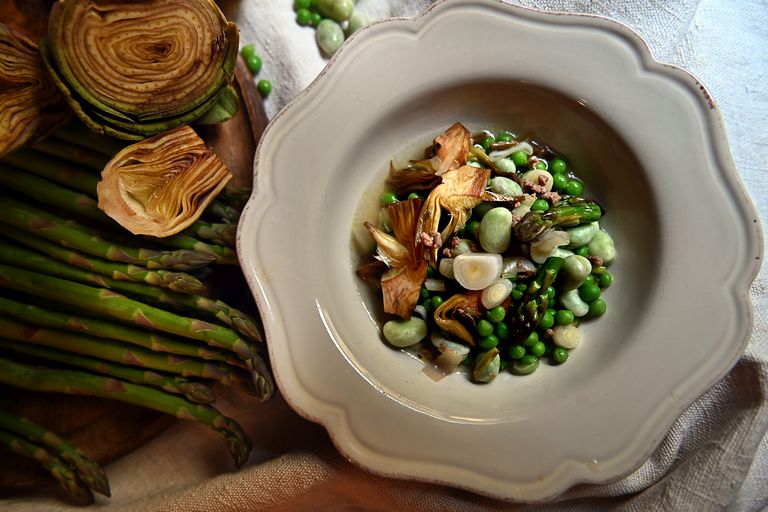
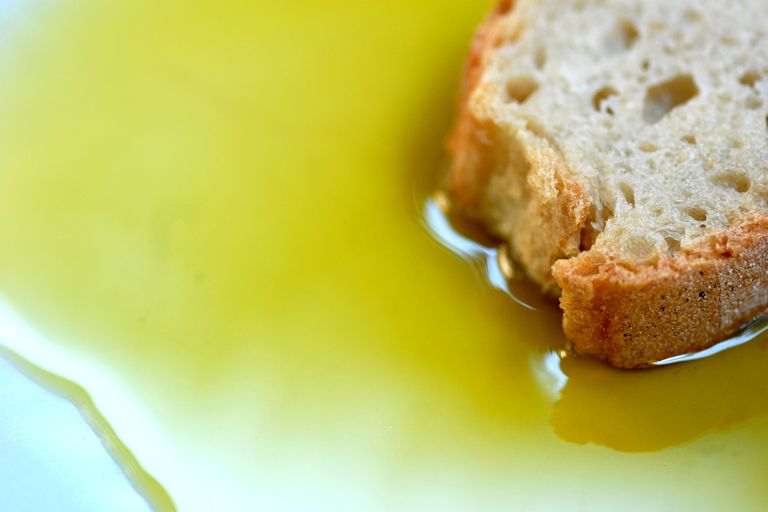
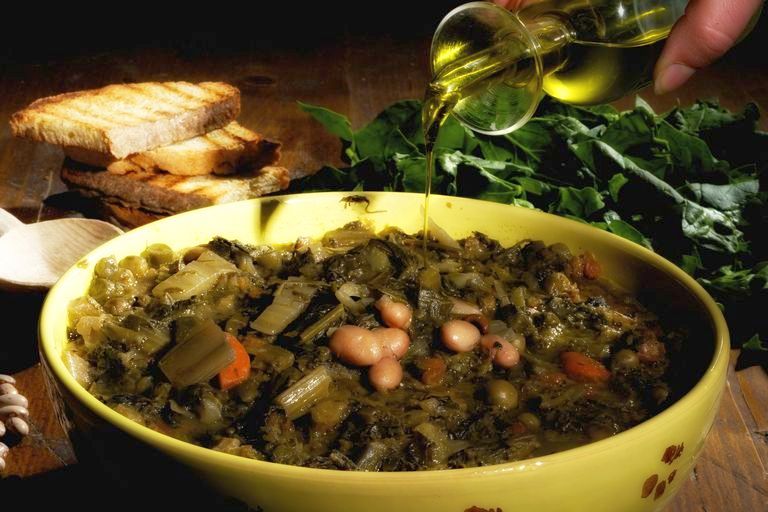
The territory of Lucca offers a wide variety of culinary excellences. On the table, two cornerstones of traditional cuisine are the zuppa frantoiana, a soup made with vegetables and aromatic herbs combined with a puree of beans and laid bread, to be seasoned strictly with extra virgin olive oil fresh from the mill. Another typical dish par excellence, served on the tables of restaurants and families on feast days, are the tordelli lucchesi (spelled with a “d” instead of the usual “t”), pasta stuffed with meat and seasoned with beef and pork ragout. Then, springtime means Garmugia, a soup of noble origins with seasonal vegetables and ground meat. Also not to be missed is spelt soup, very creamy, prepared with different types of beans. Among the Slow Food presidia are red beans.
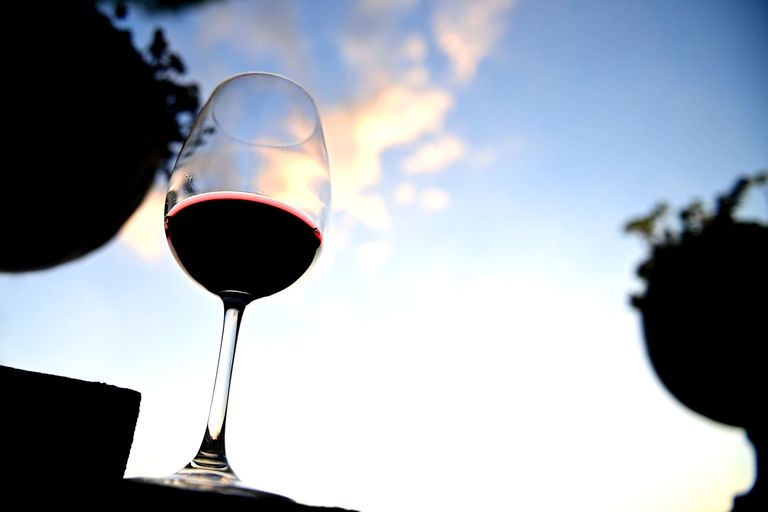
Main courses include rovellina (beef repassed in tomato and caper sauce), fried poultry and vegetable stews, simple but tasty, accompanied by the fragrant DOC wines of the Lucchesi Hills and Montecarlo.
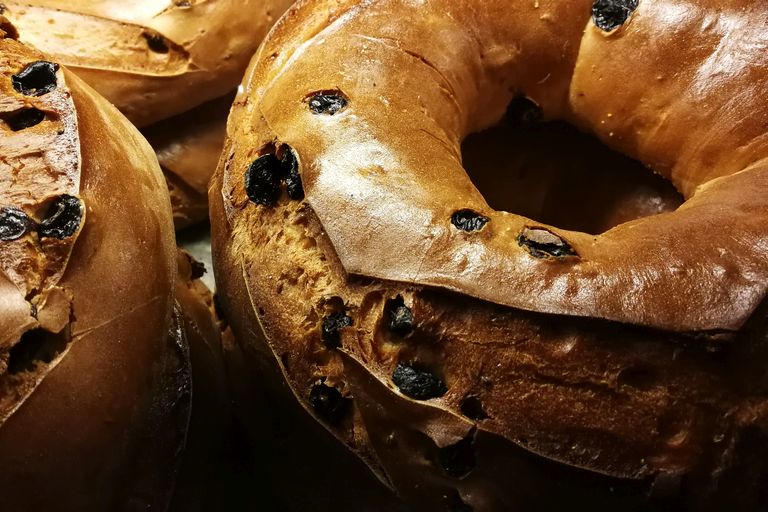
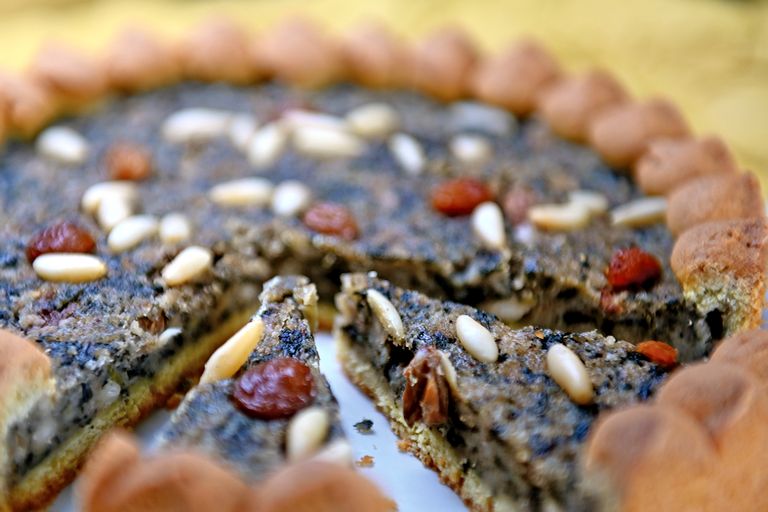
Other specialities include buccellato, a simple, bread-like cake, rich in sultanas and aniseed, and torta co’ becchi, a shortcrust pastry base filled with chard, pine nuts, sultanas, stale bread and spices, which is also available in a chocolate version. Typical liqueurs to pleasantly end a meal are biadina and china Massagli, with a slightly bitter herbal taste.



Points of Interest
One cannot say to have seen Lucca without a tour of the Walls, 4.2 kilometres long and 12 metres high, which offer a spectacular and ever-changing view of the monuments, churches and palaces of the city embraced by their mighty ramparts.
Another unmistakable symbol of the city is the Guinigi Tower, with its garden of holm oaks on top of the building. To reach the terrace of the elegant tower, built by the noble Guinigi family, 230 steps must be climbed.
In the heart of the historic centre, a stop at the splendid Piazza Anfiteatro is an absolute must. It has a unique elliptical shape and was built on the remains of the Roman amphitheatre. One of Lucca’s most iconic sights, the square is surrounded by restaurants and shops.
Lucca, a jewel of art and culture and for centuries a city-state, is at the crossroads of historical pilgrimage routes, above all the Via Francigena due to the presence of the very ancient Volto Santo, the oldest wooden statue in the West, kept in the cathedral of San Martino and celebrated in September with the so-called Luminara, a long and highly attended procession through the streets of the old town lit by thousands of small candles.
The centre of the city – whose history can be learned in the museum of Villa Guinigi and in the Palazzo Ducale, inhabited by Napoleon’s sister, Elisa Bonaparte – is Piazza San Michele, the ancient Roman Forum characterised by its stupendous church on whose façade stands the large marble statue of the archangel Michael.
Lucca is the city of music, from Luigi Boccherini and Alfredo Catalani to its most famous and illustrious citizen, the great opera composer Giacomo Puccini, whose birthplace is in Corte San Lorenzo, now the Puccini Museum, which, filled with the scores and costumes of the Maestro’s operas, is one of the most visited places in the city. Let’s not forget Palazzo Mansi, a national museum where visitors can relive the splendour of Lucca, and Palazzo Pfanner with its marvellous Baroque garden, the set of many international films.
Among the most characteristic streets is Via dei Fossi. Its moat was built in 1376 to defend the city and the water was later used to run numerous craft workshops. Walking along Via dei Fossi allows visitors to breathe in the popular and industrious spirit of Lucca and to explore some of its most interesting spots, from the 16th-century Villa Bottini-Buonvisi to Porta San Gervasio, one of the two gates of the medieval walls that still exist, to the delightful 19th-century Botanical Garden that houses some centuries-old trees.


Pisa
Overview
Pisa, world-famous for its Leaning Tower, is a city that offers much to its visitors. The Cathedral, the Baptistery, and the Campo dei Miracoli form one of the most visited monumental complexes in Italy. Pisa is also a lively and vibrant city, thanks to the presence of its historic university. The Arno River flows through the city, providing romantic views, while its proximity to the Tuscan coast makes it an ideal destination for tourists and history enthusiasts alike.


Gastronomy
Among the most distinctive specialties is Mucco Pisano, a nearly extinct native cattle breed rediscovered for its tender and flavorful meat, used in succulent roasts and braised dishes. Cecìna, a thin chickpea flour flatbread baked in a wood-fired oven, is a beloved street food among the Pisans. Crispy on the outside and soft inside, it is enjoyed on its own or inside a crunchy sandwich, often accompanied by a glass of spuma bionda. Among desserts, the torta coi bischeri stands out, a traditional pie filled with chocolate, rice, raisins, pine nuts, and liquor-infused aromas, with its characteristic “bischeri” decoration, folded pastry points around the edges.
A unique product from the coastal area is spiaggia honey, collected from the nectar of wild plants growing on the dunes of Marina di Pisa and San Rossore. Delicate and aromatic, it pairs perfectly with local cheeses. Equally prized are the pine nuts from San Rossore, harvested from maritime pines in the namesake estate, offering a sweet and intense flavor that enhances both sweet and savory dishes.
Monti Pisani olive oil is a recognized excellence, with a fruity and slightly spicy taste, produced from centuries-old olive groves on sun-exposed hills caressed by sea breezes. It is perfect for dressing vegetables and bruschetta. Another local delicacy is the white truffle of San Miniato, known for its intense and refined aroma, featured in many Tuscan dishes such as truffle tagliolini and truffle-infused eggs.
Among the traditional dishes, bordatino alla pisana is a rustic soup made with corn flour, beans, and black cabbage, once considered a humble dish but rich in flavor. Spaghetti alle arselle celebrates the taste of the sea, featuring small, flavorful clams sautéed with garlic, olive oil, and parsley.
Salt cod with leeks and Pisa-style stockfish with potatoes are dishes of peasant origin, simple yet full of flavor, where dried fish is slowly cooked with generous amounts of leeks or potatoes, absorbing the flavors of the vegetables and local olive oil.


Wine and beverages
Pisa and the Terre di Pisa are among the most diverse territories in terms of climate and geology, making them ideal for experimenting with high-quality winemaking that blends tradition and innovation. The main grape variety is Sangiovese, either as a single varietal or blended with native grapes such as Syrah, Cabernet, and Tempranillo, the principal Spanish red grape introduced along the Via Francigena by pilgrims.
In 2011, the Terre di Pisa DOC was established, followed by the founding of the Terre di Pisa Wine Consortium in 2018 to protect and promote this appellation and serve as a catalyst for the enhancement of high-quality viticulture.
While red wines are the classic expression of the Pisan terroir, there are also notable white wines. The main grape varieties include Vermentino, Trebbiano Toscano, Malvasia, and Colombana, along with some international varieties. The best expressions are found in Bianco Pisano di San Torpè DOC and Tuscan IGT wines. The premier route for wine lovers is the Strada del Vino delle Colline Pisane.
Pisa is also home to an innovative craft beer industry, where breweries use geothermal steam as a sustainable energy source. The result is a diverse selection of craft beers created through meticulous research and selection of high-quality raw ingredients. Some breweries offer chestnut-flavored beers made with locally sourced ingredients, while others produce unpasteurized, top-fermented beers, perfect for pairing with typical products from local farms.
Another notable product is Vin Santo, a historic Tuscan dessert wine made from carefully selected Trebbiano, Malvasia, and Colombana grapes, either alone or blended. These grapes are left to dry for three months on racks before being pressed to extract a dense, sweet juice that is then aged for at least five years in small oak barrels known as caratelli.
Vin Santo ranges in color from golden to amber, with an intense, ethereal aroma featuring hints of honey, walnuts, and raisins. It can be dry, slightly sweet, or rich and rounded. A rare variety is Vin Santo Occhio di Pernice, made from red grapes. One theory behind its name suggests that it was historically used during Mass. Today, it is a prized dessert wine, best enjoyed with cheeses or the classic Tuscan almond biscotti known as cantuccini. The Terre di Pisa region produces the Vin Santo San Torpè DOC.
Points of interest
Piazza del Duomo, also known as Piazza dei Miracoli, is the historical and artistic heart of the city, recognized as a UNESCO World Heritage Site. It houses four masterpieces of Pisan Romanesque art: the Cathedral of Santa Maria Assunta, with its majestic white and gray marble façade; the Baptistery of San Giovanni, the largest in Italy, renowned for its extraordinary acoustics; the Camposanto Monumentale, an ancient cemetery rich in medieval frescoes; and, of course, the world-famous Leaning Tower, the cathedral’s bell tower, which has captivated visitors for centuries with its unique tilt.
The Lungarni are another must-see attraction. The banks of the Arno River, which flows through the city, offer romantic views and picturesque scenery, especially at sunset. A walk along Lungarno Mediceo and Lungarno Pacinotti reveals elegant Renaissance palaces, historic churches such as Santa Maria della Spina—a Gothic jewel overlooking the river—and lively cafés frequented by students and locals.
The Pisan coastline boasts kilometers of sandy beaches stretching from Marina di Pisa to Tirrenia and Calambrone, ideal for sunbathing or strolling along the seafront. The coast features a mix of well-equipped beach resorts and unspoiled stretches of free beach surrounded by fragrant pine forests and crystal-clear waters.
A short distance from the city center lies the San Rossore Park, a protected natural area extending to the sea, offering breathtaking landscapes of ancient pine forests, sandy dunes, and wetlands inhabited by diverse wildlife. Visitors can explore the park on foot, by bike, or on horseback, or join guided tours to learn about its rich biodiversity.
Finally, Piazza dei Cavalieri is one of Pisa’s most captivating squares, once the political center of the medieval city. Redesigned during the Renaissance by Giorgio Vasari under the commission of the Medici, the square became the headquarters of the Order of the Knights of Saint Stephen. Today, it is home to the prestigious Scuola Normale Superiore, one of Italy’s top universities, and the Palazzo della Carovana, adorned with intricate façade decorations.